CrochetPatternGen

Crochet Cat Patterns (Free Charts)

Real cats, real charts — each pattern below was generated from an actual photo, with grid, palette, and stitch counts included.

Most cat chart pages show the same dozen recycled pixel cats. These three are different: each one was converted from a real cat photo by the CrochetPatternGen engine — the same tool you can use on your own cat. The grid is exact, every color is counted, and what you see is genuinely what you stitch.

Cats are the most-requested subject for photo blankets, and for good reason: a clear photo with a plain background converts beautifully. All three charts work in single crochet for a panel or pillow, or as C2C blocks for a blanket.

The free charts

Digital preview
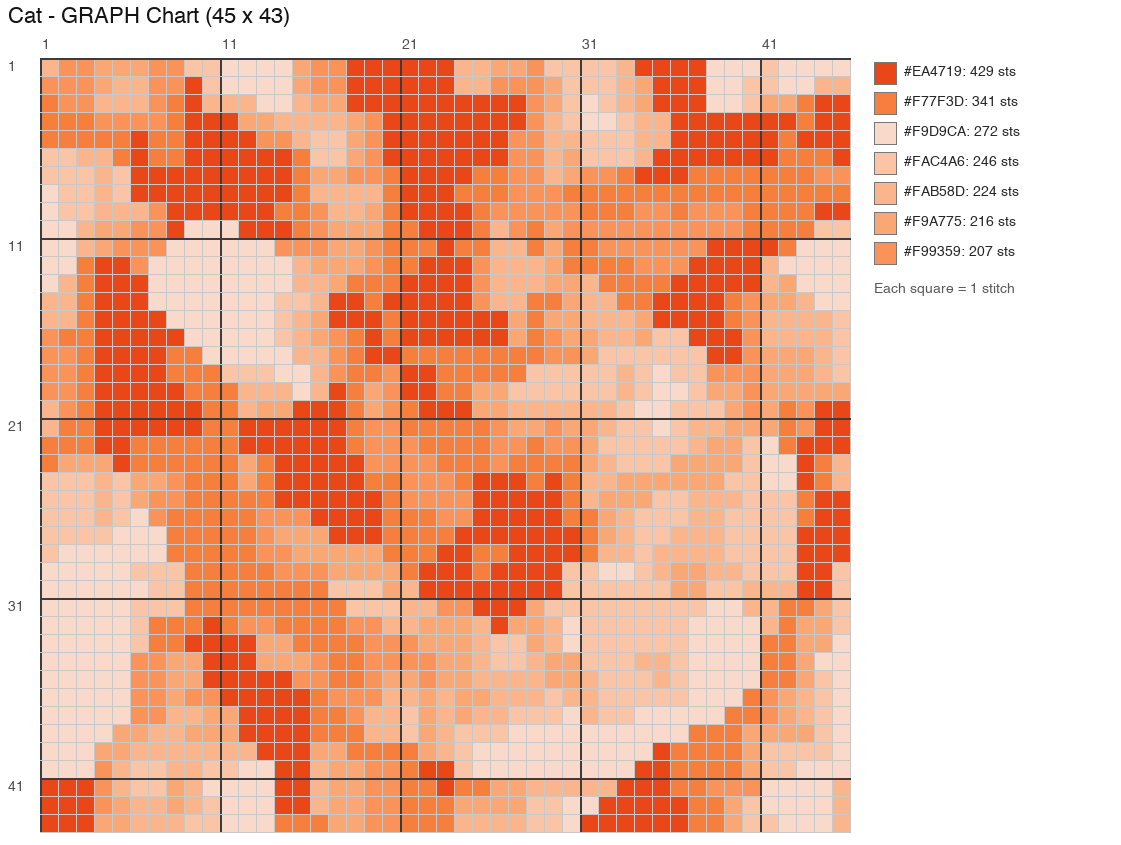
Tuxedo Cat on Green crochet chart, 45 × 32 stitches, 7 colors

32 rows

Click the chart to jump to a row · Progress saves in your browser — no account needed 💕

Rendered previewTuxedo Cat on Green as worked crochet fabric — simulated stitch texture
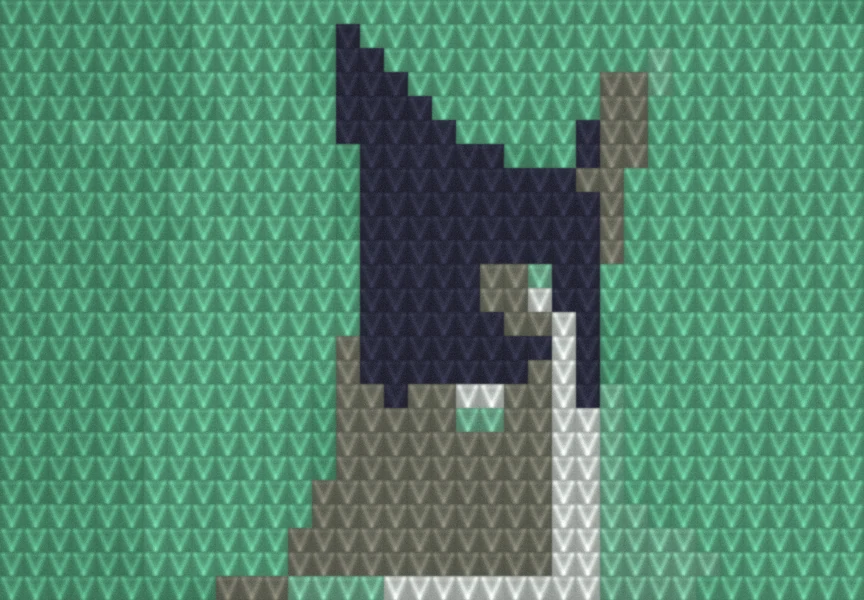
Simulated stitch texture from the chart grid — not a photo.

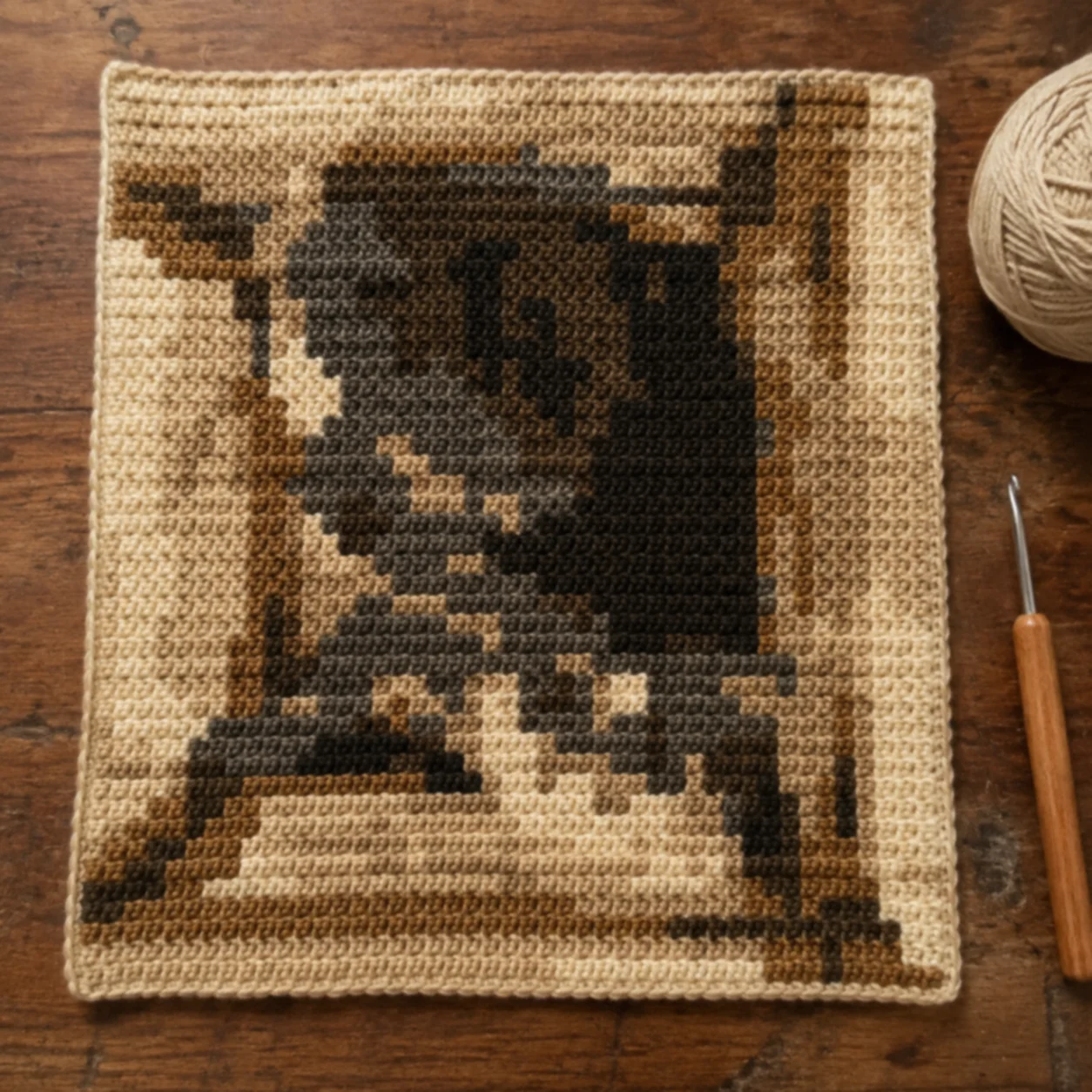
Finished lookTuxedo Cat on Green — finished crochet piece inspiration
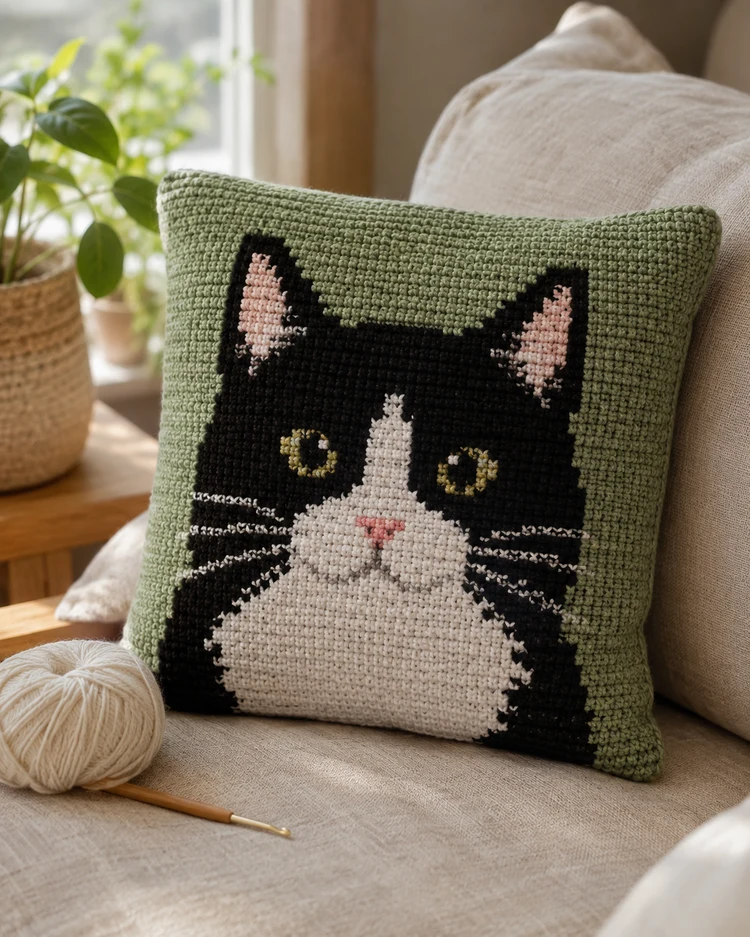
Tuxedo Cat on Green

Difficulty
Easy
Technique
Graph (single crochet) or C2C
Chart size
45 × 32 stitches
Colors
7
Yarn needed
≈ 90 yds total
Source
Generated from a real photo

A black-masked tuxedo cat against a flat green ground — big, calm color blocks make this the fastest of the three to stitch.

Download chart (PNG) ⬇️
Digital preview
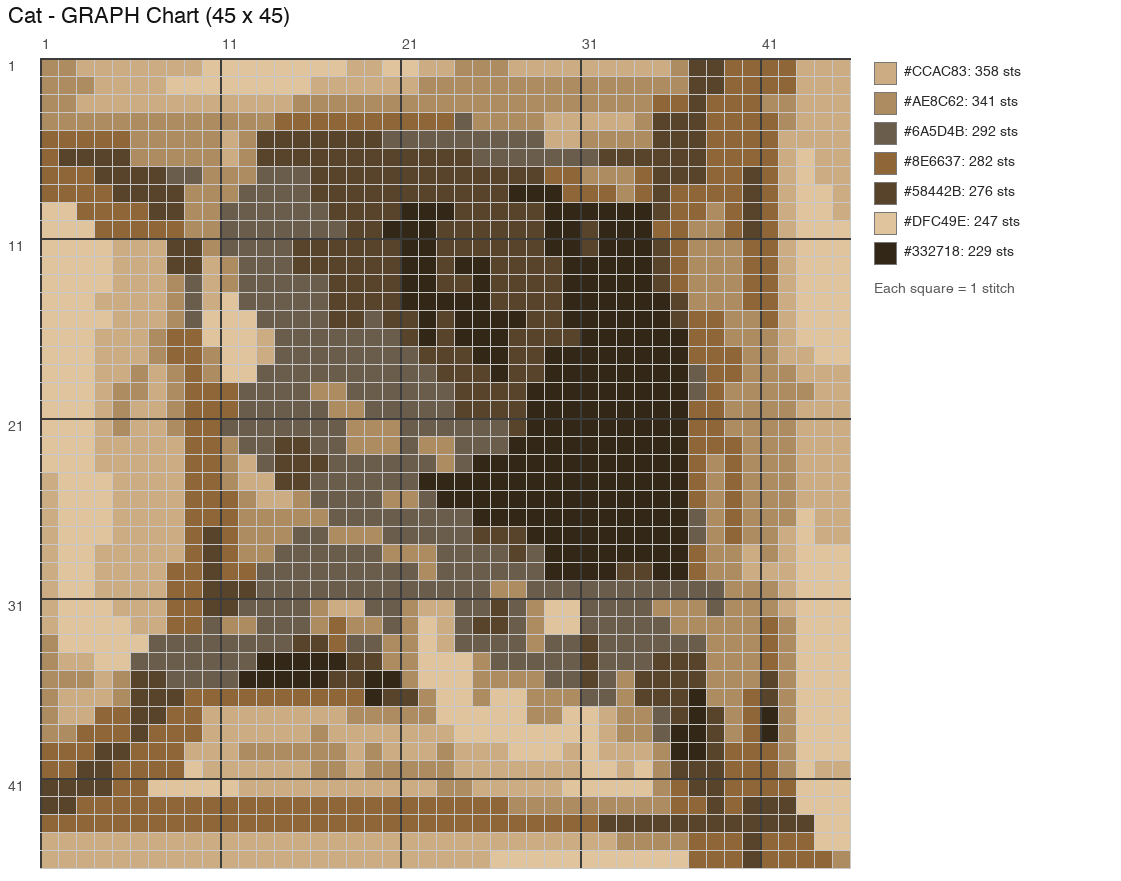
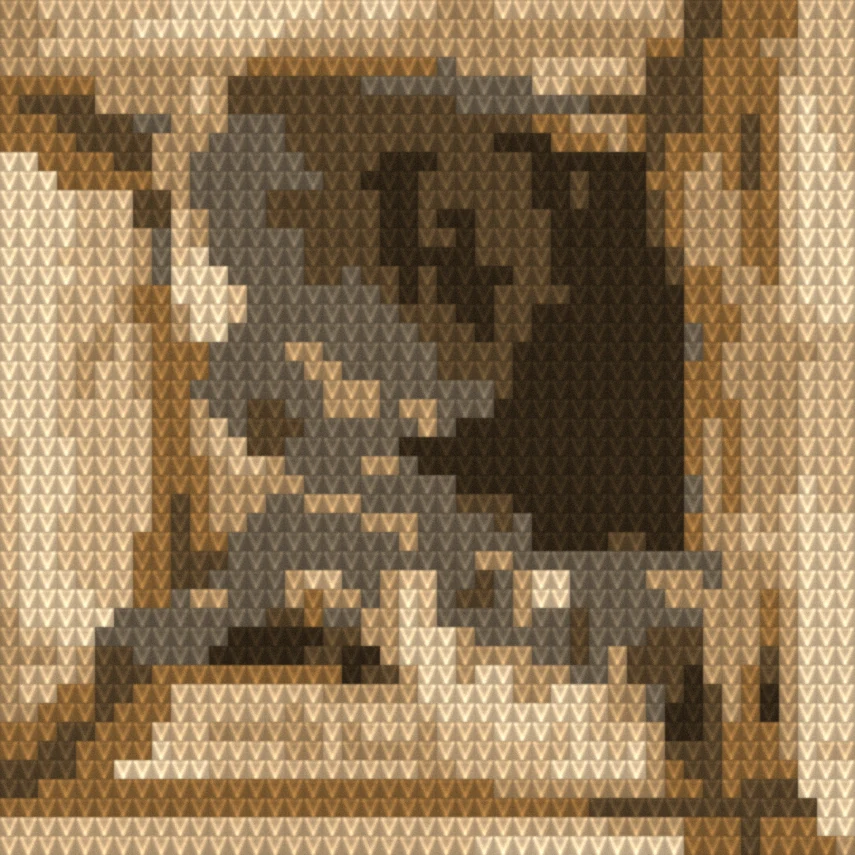
Grey Cat in a Box crochet chart, 45 × 45 stitches, 7 colors

45 rows

Click the chart to jump to a row · Progress saves in your browser — no account needed 💕

Rendered previewGrey Cat in a Box as worked crochet fabric — simulated stitch texture

Simulated stitch texture from the chart grid — not a photo.

Finished lookGrey Cat in a Box — finished crochet piece inspiration

Grey Cat in a Box

Difficulty
Intermediate
Technique
Graph (single crochet) or C2C
Chart size
45 × 45 stitches
Colors
7
Yarn needed
≈ 125 yds total
Source
Generated from a real photo

Because of course the cat is in the box. Moody greys and blues — a good match for a monochrome modern blanket.

Download chart (PNG) ⬇️
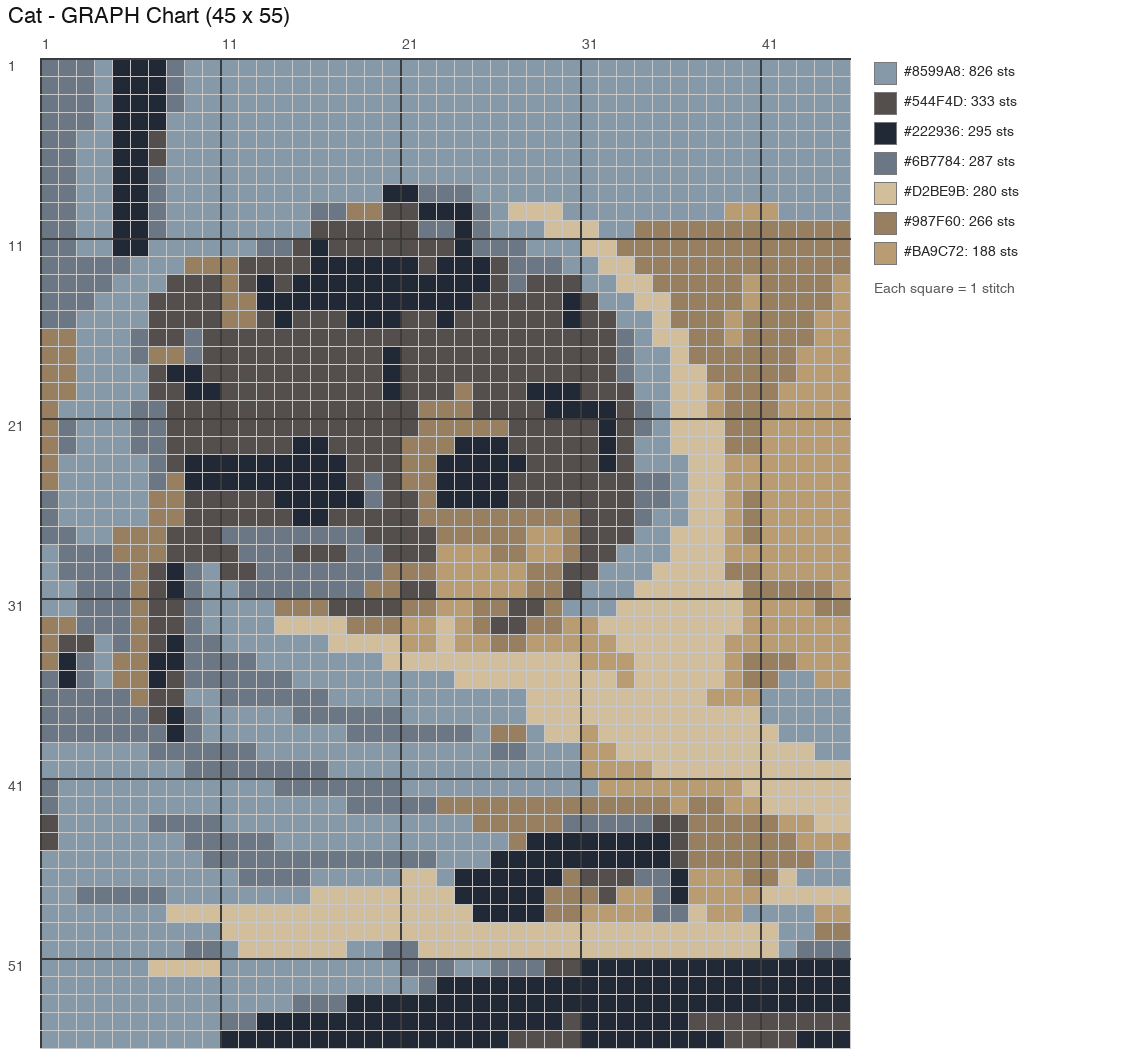
Digital preview
Tabby Kitten in a Blanket crochet chart, 45 × 55 stitches, 7 colors

55 rows

Click the chart to jump to a row · Progress saves in your browser — no account needed 💕

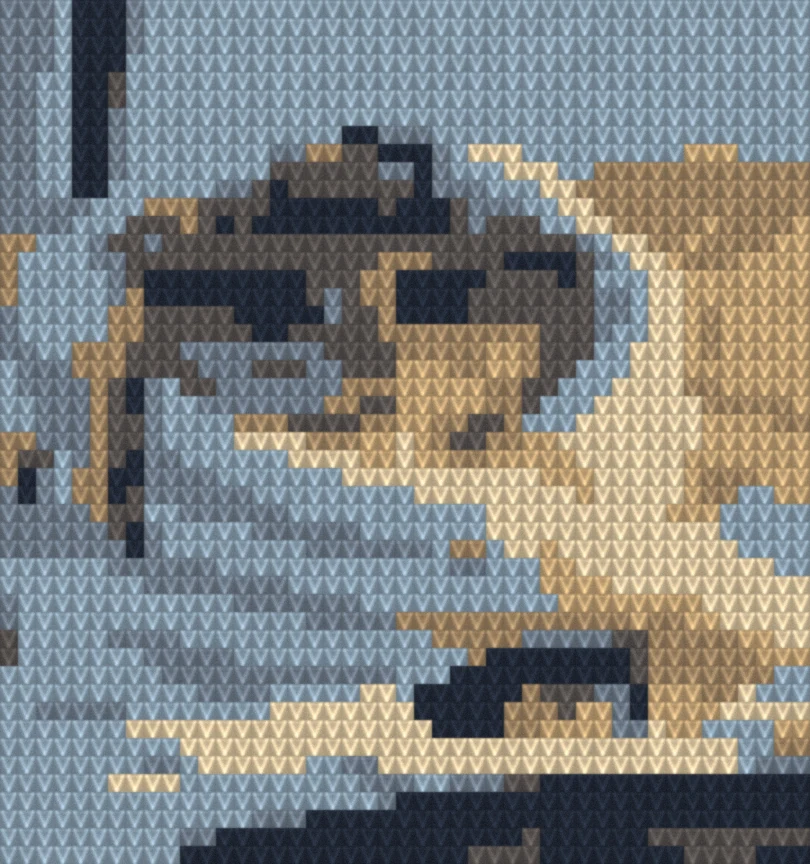
Rendered previewTabby Kitten in a Blanket as worked crochet fabric — simulated stitch texture

Simulated stitch texture from the chart grid — not a photo.

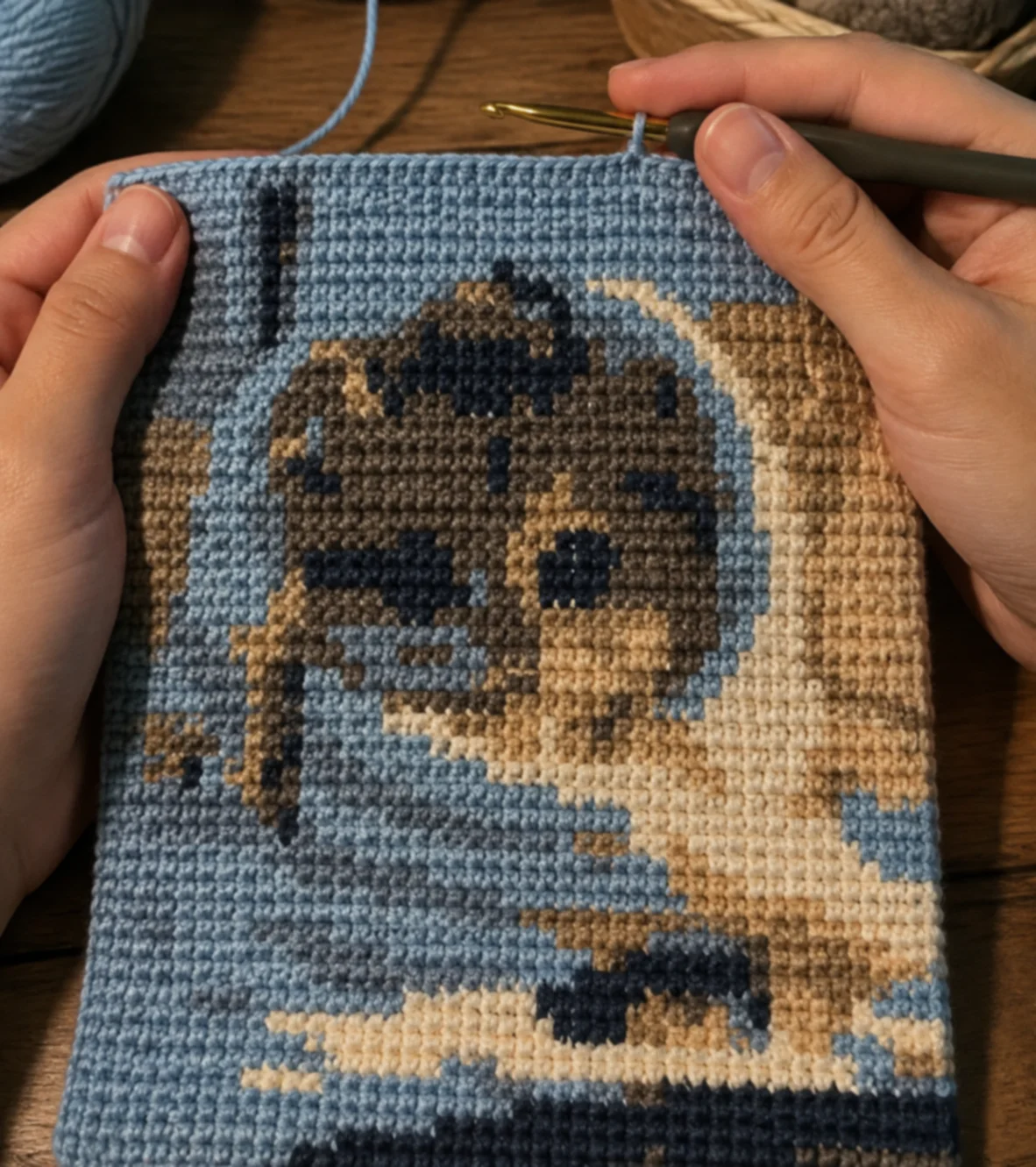
Finished lookTabby Kitten in a Blanket — finished crochet piece inspiration

Tabby Kitten in a Blanket

Difficulty
Intermediate
Technique
Graph (single crochet) or C2C
Chart size
45 × 55 stitches
Colors
7
Yarn needed
≈ 150 yds total
Source
Generated from a real photo

A kitten wrapped in a striped towel — the chart that proves pet photos work. Tall format suits a wall hanging or blanket center panel.

Download chart (PNG) ⬇️

How to crochet it

  1. Gather your materials

    Worsted weight (#4) yarn in 7 colors, a 5.0 mm (H/8) hook, a tapestry needle, and scissors. Each crochet cat chart below lists its own total — about 90 yards for the tuxedo, 125 for the grey cat, 150 for the tabby kitten — and the legend's per-color stitch counts double as your shopping list.

  2. Check the finished size

    All three charts are 45 stitches wide, which lands around 28 cm at a typical 16 sc × 18 rows = 10 cm gauge; heights run from about 18 cm (tuxedo) to 31 cm (kitten). Worked as a C2C cat blanket with the same yarn, each cell becomes a block and the piece comes out roughly twice as large — go up a hook or yarn weight for a bigger piece.

  3. Work the chart from the bottom up

    One square = one single crochet. Start at the bottom row and work up: odd rows are the right side (read right to left), even rows the wrong side (read left to right). Prefer corner-to-corner? Start at the bottom-right corner and work diagonally — the same chart works for both.

  4. Change colors cleanly

    Finish the last stitch of the old color with the new one, and don't carry yarn more than 3–4 stitches. These charts came from real photos, so expect a few scattered shading stitches — small bobbins keep them neat on the back.

  5. Add a border and finish

    Work one round of single crochet in the background color around the panel, with 3 sc in each corner, then weave in the ends with the tapestry needle. A light steam block evens out the denser photo shading before you sew the panel down.

  6. Turn it into a finished piece

    Sew the panel onto a pillow cover or blanket square, or make it the centerpiece of a full cat graphgan — the tall kitten chart is a natural wall hanging or blanket center panel. For your own cat, photograph it against a plain background and set the generator to 45–60 stitches wide with 6–8 colors.

Make your own chart

Have a photo you love? The free generator turns it into a stitch-ready chart — grid, palette, and stitch counts included.

Frequently asked questions

Can I make a crochet cat blanket from these charts?

Yes — that's the intended use. Work the chart in C2C blocks for a quick blanket, or in single crochet for a denser panel you can join with other squares. The per-color stitch counts convert directly into yarn amounts with the yarn calculator.

How do I turn my own cat's photo into a crochet pattern?

Use the pattern generator: upload the photo, choose 45–60 stitches wide and 6–8 colors, and download the chart. Photos with a plain, contrasting background and good light give the cleanest charts — the tool warns you when a photo will lose detail.

Are these cat patterns free?

Yes, all three charts are free to download for personal use. They were generated from real photos by our conversion engine — no hand-tracing, no recycled clipart.

What skill level are these cat charts?

Intermediate, mostly due to size and color changes rather than hard stitches — everything is single crochet or C2C blocks. If you're new to colorwork, start with the frog chart (smaller), then come back for the cats.

Why do these charts look different from other cat patterns online?

Because they're converted from real photographs, not hand-drawn pixel art. That gives natural shading and realistic poses — and it means your own cat can be the next chart on the page.