CrochetPatternGen

Crochet Animal Patterns

Free animal charts with grid, palette, and stitch counts — cats, dragons, frogs, and a generator for any animal you can photograph.

Animal charts turn a grid of colored squares into a kitten, a dragon, or a frog on your blanket, pillow, or wall hanging. Every pattern here is a real, followable chart: each cell is one stitch (or one C2C block), every color comes with an exact stitch count, and the grid is sized for worsted-weight yarn.

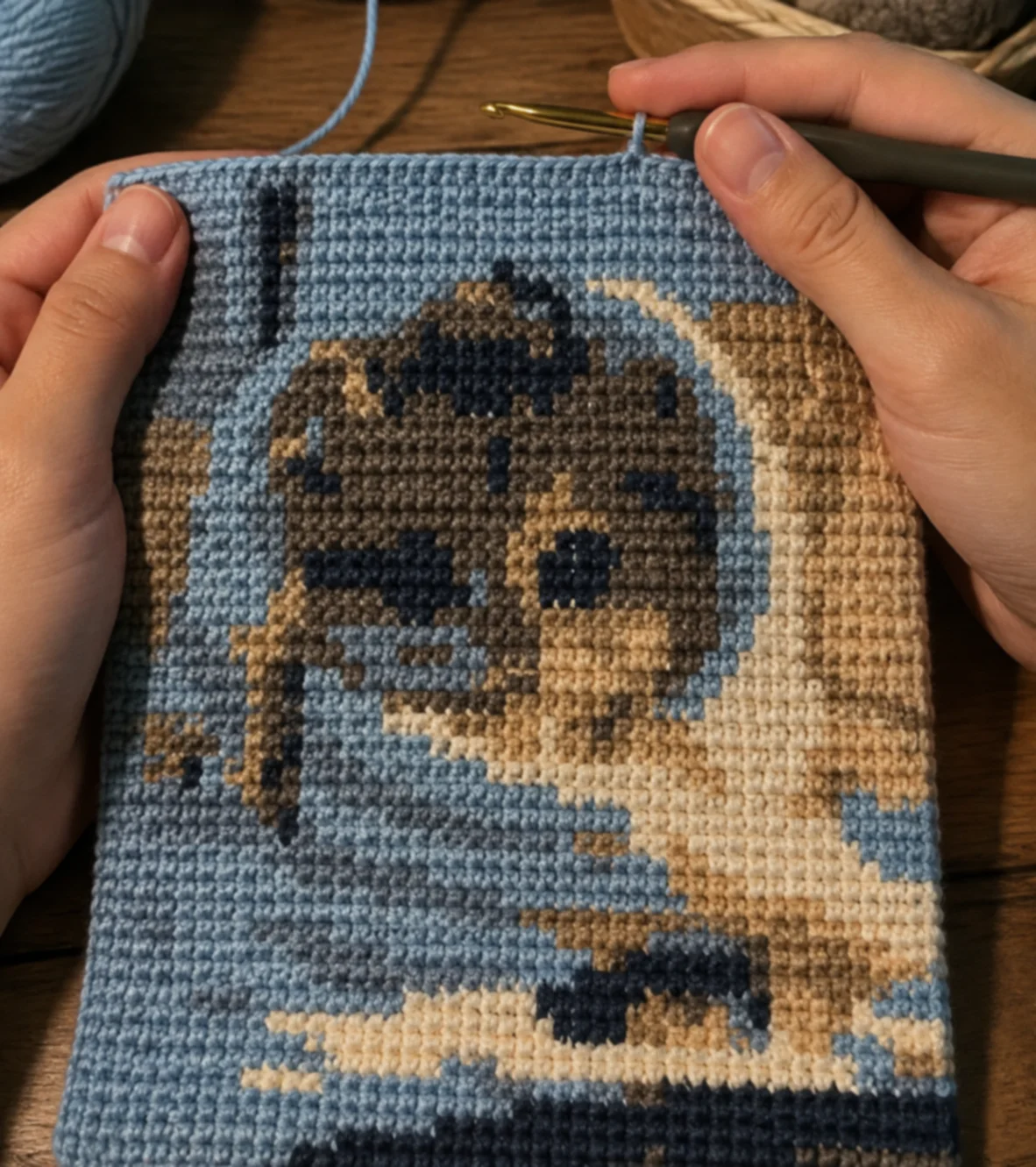
Can't find the animal you want? The pattern generator makes a chart from any clear photo — upload your pet and it becomes a stitch grid with a counted palette. That's how the cat charts on this page were made.

The free charts

Digital preview
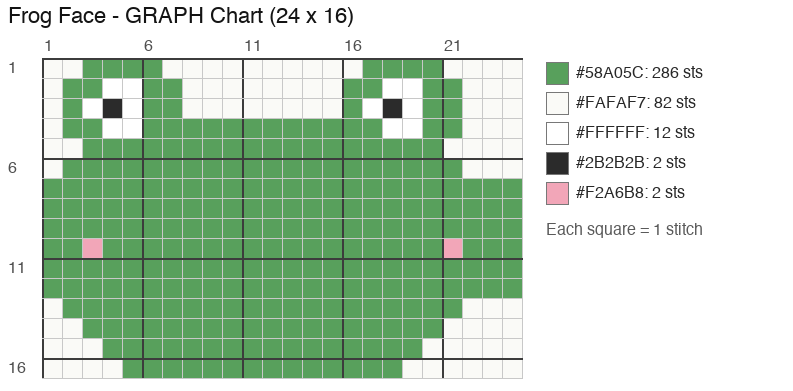
Frog Face crochet chart, 24 × 16 stitches, 5 colors

16 rows

Click the chart to jump to a row · Progress saves in your browser — no account needed 💕

Rendered previewFrog Face as worked crochet fabric — simulated stitch texture
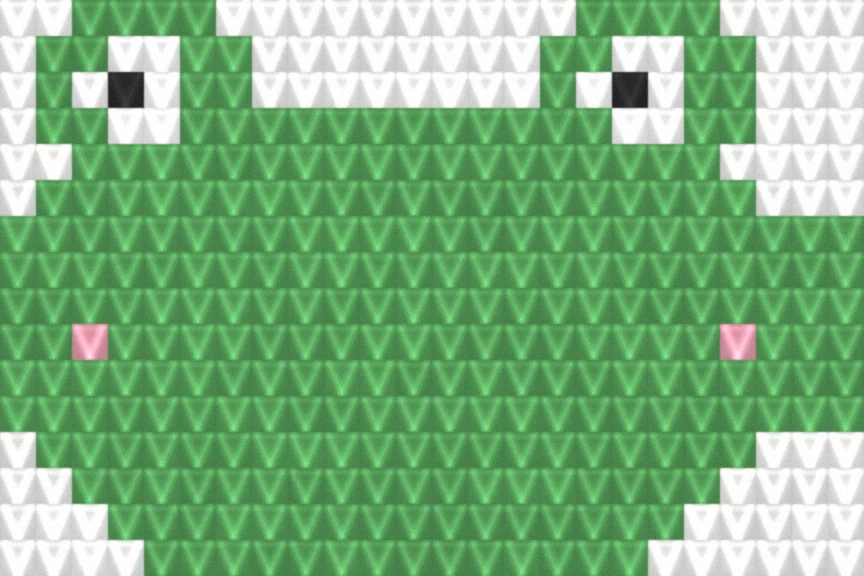
Simulated stitch texture from the chart grid — not a photo.

Finished lookFrog Face — finished crochet piece inspiration
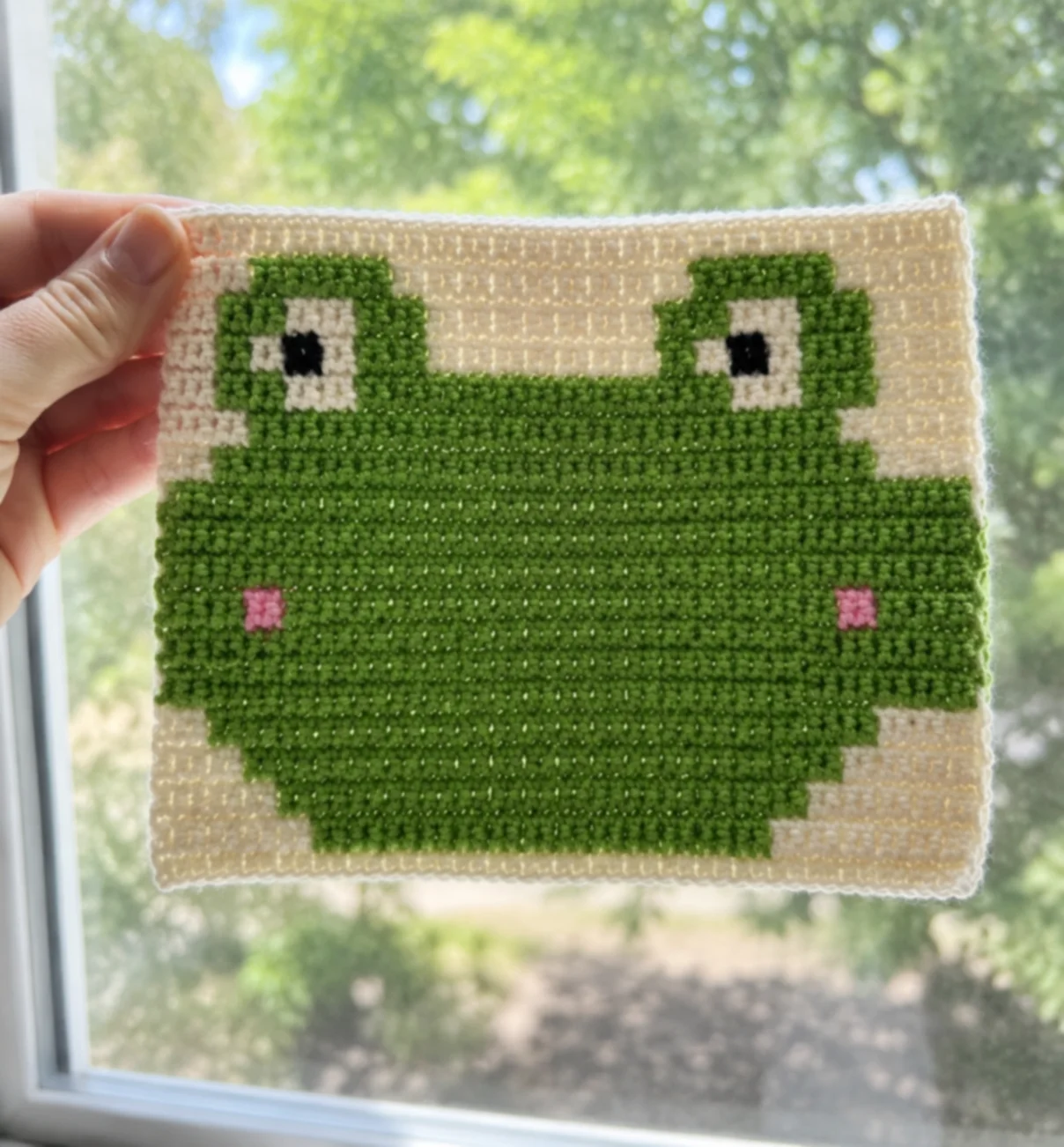
Frog Face

Difficulty
Beginner
Technique
Graph (single crochet)
Chart size
24 × 16 stitches
Colors
5
Yarn needed
≈ 25 yds total
Source
Original pixel design

The classic first graphgan motif — big eyes, pink cheeks, done in an evening. Great on a baby blanket corner or a pouch.

Download chart (PNG) ⬇️
Written instructions (row by row)

Work from the bottom up. Odd rows are the right side (worked right-to-left), even rows the wrong side (left-to-right). Tap a row to mark it done — the chart shades it too.

creamleaf greenwhiteblackpink
Digital preview
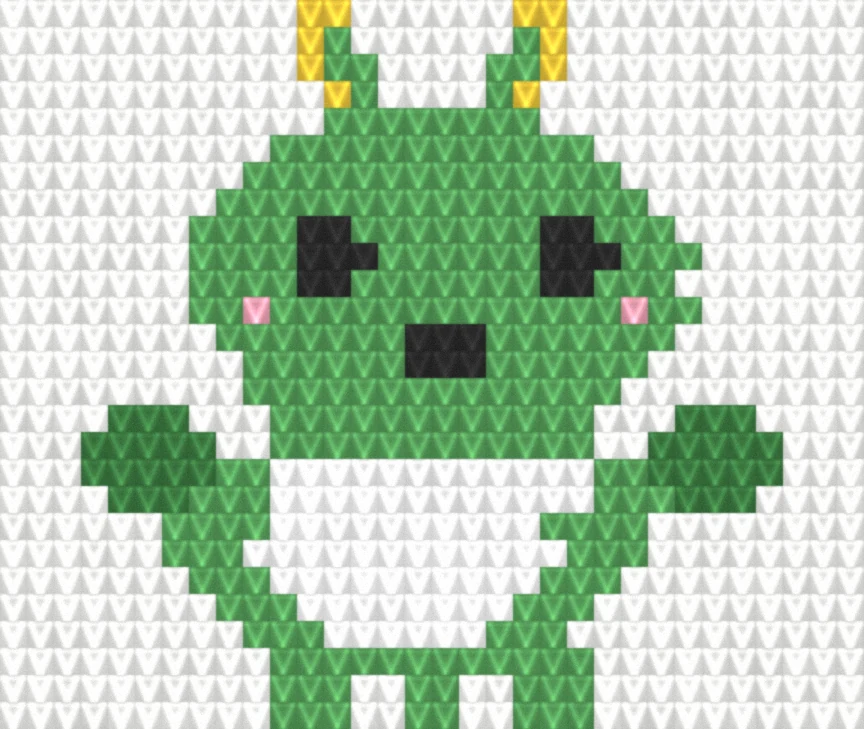
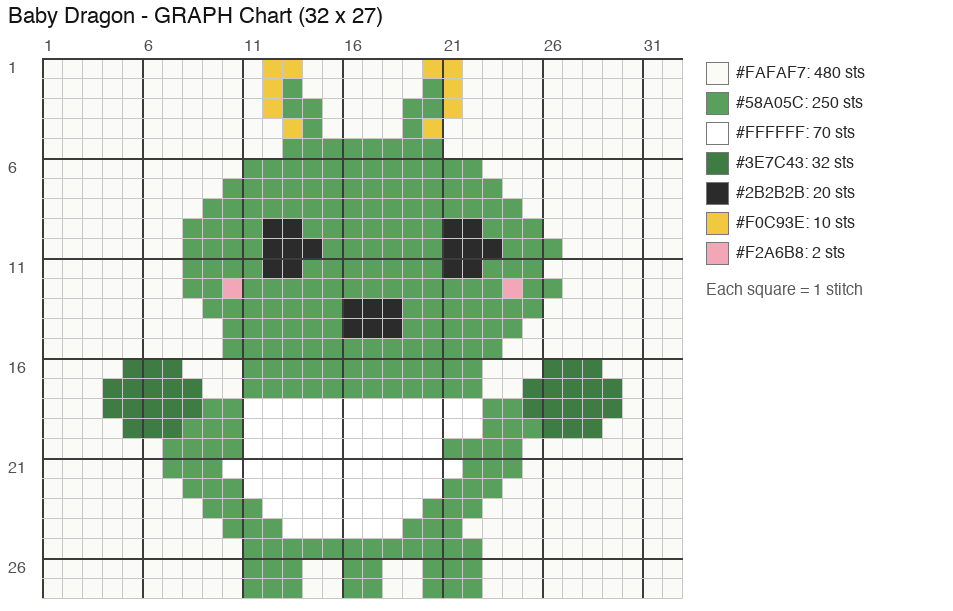
Baby Dragon crochet chart, 32 × 27 stitches, 7 colors

27 rows

Click the chart to jump to a row · Progress saves in your browser — no account needed 💕

Rendered previewBaby Dragon as worked crochet fabric — simulated stitch texture

Simulated stitch texture from the chart grid — not a photo.

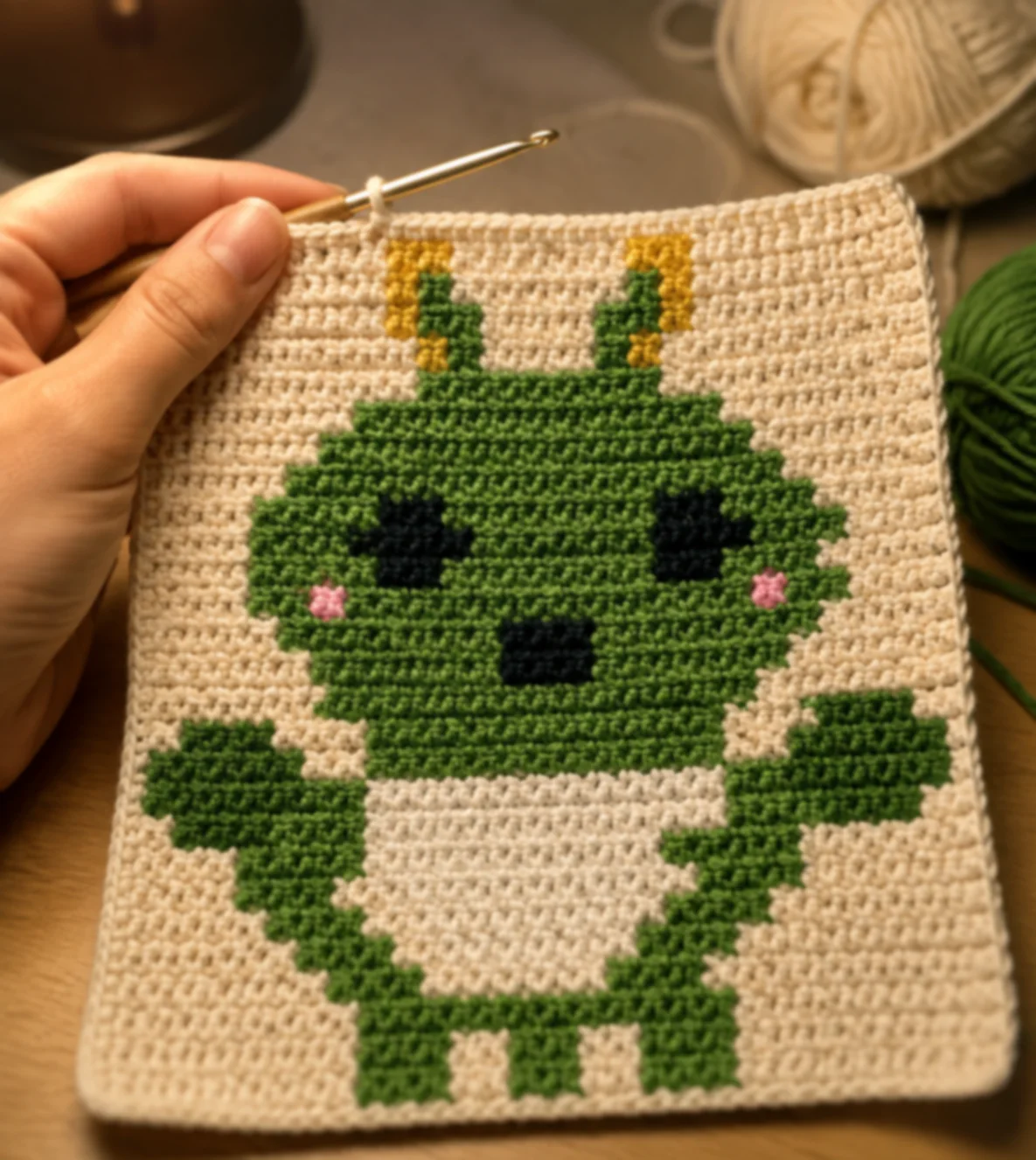
Finished lookBaby Dragon — finished crochet piece inspiration

Baby Dragon

Difficulty
Easy
Technique
Graph (single crochet)
Chart size
32 × 27 stitches
Colors
7
Yarn needed
≈ 55 yds total
Source
Original pixel design

A chibi dragon with little horns and wings. The 864 stitches make it a weekend panel; swap the green for any house color.

Download chart (PNG) ⬇️
Written instructions (row by row)

Work from the bottom up. Odd rows are the right side (worked right-to-left), even rows the wrong side (left-to-right). Tap a row to mark it done — the chart shades it too.

creamyellowleaf greenblackpinkforest greenwhite
Digital preview
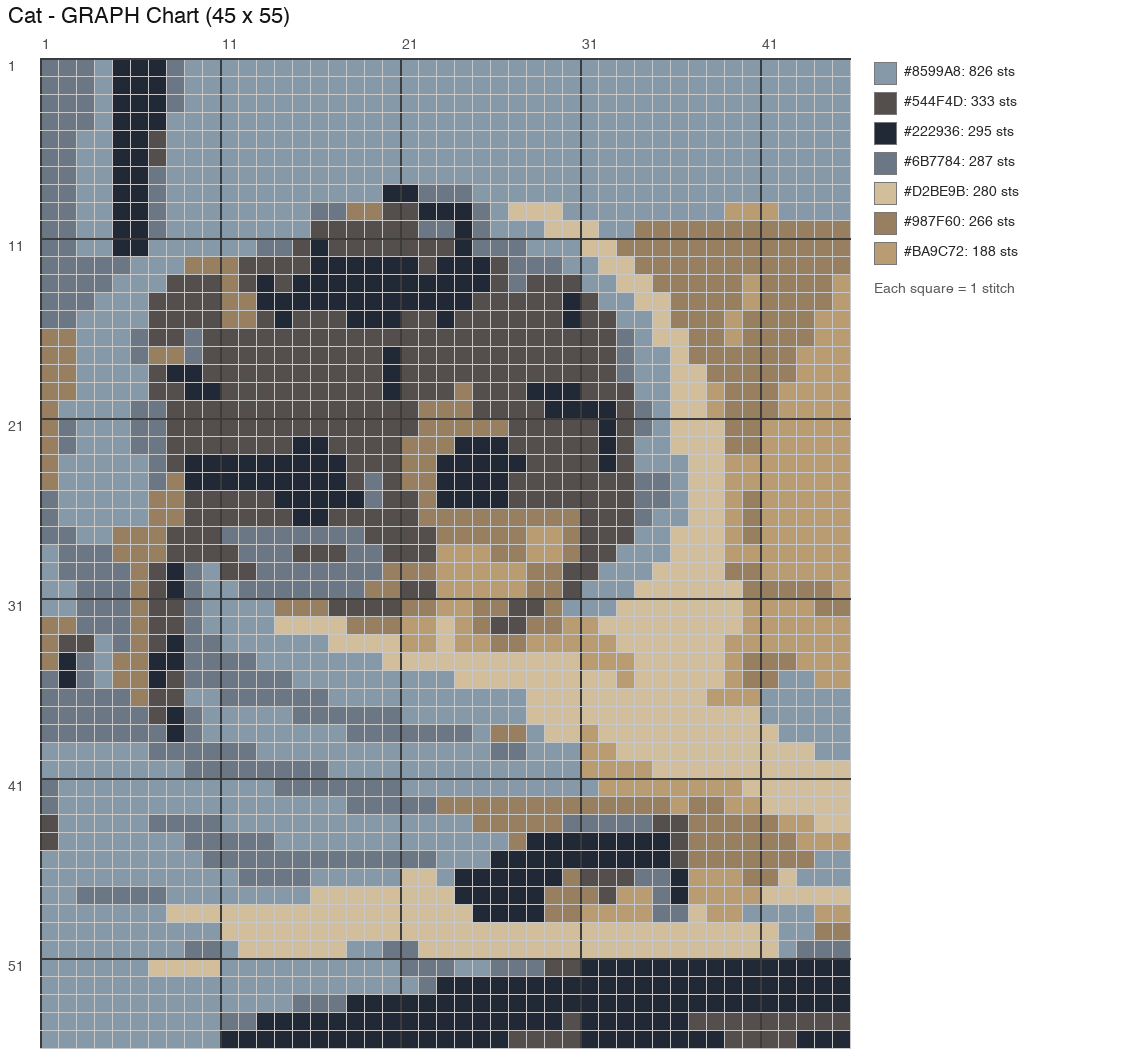
Tabby Kitten (from a real photo) crochet chart, 45 × 55 stitches, 7 colors

55 rows

Click the chart to jump to a row · Progress saves in your browser — no account needed 💕

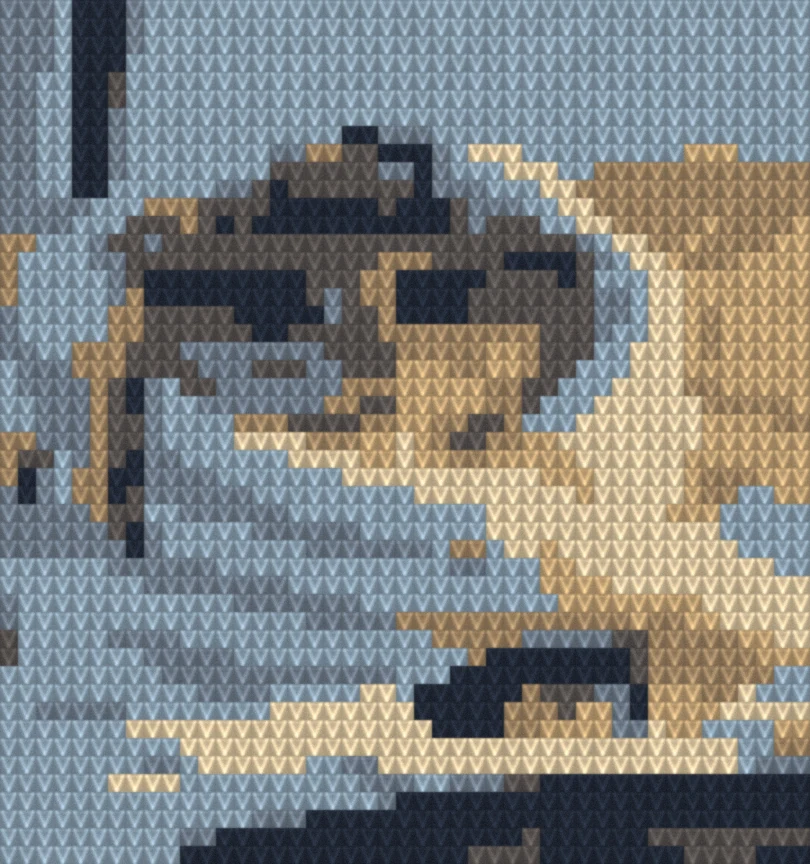
Rendered previewTabby Kitten (from a real photo) as worked crochet fabric — simulated stitch texture

Simulated stitch texture from the chart grid — not a photo.

Finished lookTabby Kitten (from a real photo) — finished crochet piece inspiration

Tabby Kitten (from a real photo)

Difficulty
Intermediate
Technique
Graph (single crochet)
Chart size
45 × 55 stitches
Colors
7
Yarn needed
≈ 150 yds total
Source
Generated from a real photo

This chart was generated from a real kitten photo by the pattern generator — proof of what your own pet photos become.

Download chart (PNG) ⬇️

How to crochet it

  1. Gather your materials

    Whichever of these crochet animal patterns you start with, the supplies stay the same: worsted weight (#4) yarn, a 5.0 mm (H/8) hook, a tapestry needle, and scissors. Yarn needs scale with the chart — the 24 × 16 frog takes about 25 yards in 5 colors, the 32 × 27 dragon about 55 yards in 7, and the 45 × 55 kitten about 150 yards, also in 7 colors.

  2. Check the finished size

    In single crochet at a typical 16 sc × 18 rows = 10 cm gauge, the frog comes out about 15 × 9 cm, the dragon about 20 × 15 cm, and the kitten about 28 × 31 cm. Pick the chart that fits your project before you cast on.

  3. Work the chart from the bottom up

    All of these free animal crochet charts read the same way: one square = one single crochet. Start at the bottom row and work up — odd rows are the right side (read right to left), even rows the wrong side (read left to right).

  4. Change colors cleanly

    Finish the last stitch of the old color with the new one, and don't carry yarn more than 3–4 stitches — drop it and pick it up again instead. Small areas like the frog's cheeks work best off a small bobbin, so the back stays tidy.

  5. Add a border and finish

    Work one round of single crochet in the background color around the panel, with 3 sc in each corner, then weave in the ends with the tapestry needle. A light steam block squares the panel up — especially useful for the taller kitten chart.

  6. Turn it into a finished piece

    Sew the panel onto a blanket, pillow, or wall hanging — or repeat a motif across a grid for a full animal graphgan. Want your own animal? Upload a photo to the generator and it comes back as a counted chart, just like the kitten here.

Make your own chart

Have a photo you love? The free generator turns it into a stitch-ready chart — grid, palette, and stitch counts included.

Frequently asked questions

Are these crochet animal patterns really free?

Yes. Every chart on this page is free to download and use for personal projects. If you sell finished items, a credit link is appreciated but not required.

What's the difference between an animal chart and an amigurumi pattern?

A chart is a colored grid you follow stitch by stitch to build a flat picture (graphgan, C2C, tapestry). An amigurumi pattern is written row-by-row instructions for a 3D stuffed animal. This page is charts; they work for blankets, pillows, and wall hangings.

Can I get a chart of my own pet?

Yes — that's exactly what the pattern generator does. Upload a clear photo of your pet (plain background works best), and it converts it to a stitch grid with per-color stitch counts in seconds.

What yarn should I use for animal charts?

Worsted-weight (#4) acrylic is the standard choice: cheap, washable, and available in every color. One single-crochet stitch at worsted weight is roughly square, so the chart proportions carry straight into the finished piece.

How do I keep the back neat in colorwork?

For panels seen from both sides, carry yarn inside the stitches (tapestry style) and keep floats under 4–5 stitches. For blanket squares that get a backing, you can simply strand colors loosely across the back.