CrochetPatternGen

Temperature Blanket Crochet Patterns

One row per day, color by the weather — three ready-made color scales and all the math to plan your year blanket.

A temperature blanket is a year-long diary you can hug: one row per day, the color picked by that day's high temperature. The concept is simple — the failure mode is planning. Pick too many shades and it turns to mud; too few and the seasons blur together. These three scales are pre-balanced so the blanket stays readable from January to December.

Each chart below shows a full scale and a sample layout. Adapt the ranges to your climate (the FAQ has the method), or chart your own scale in the generator.

The free charts

Digital preview
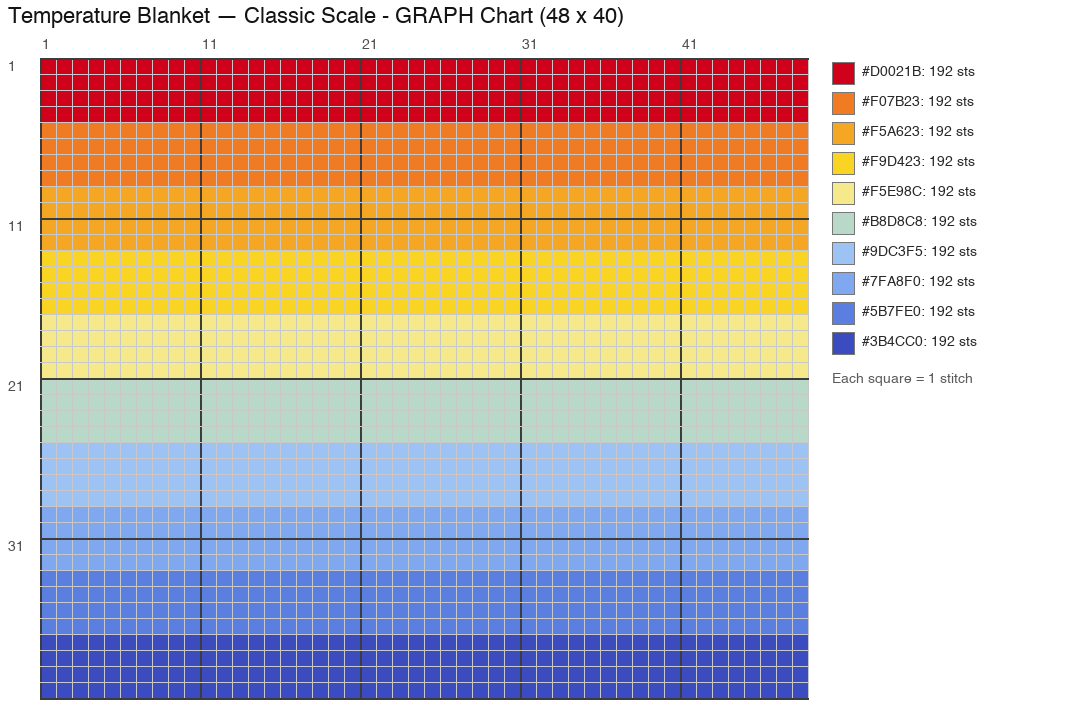
Classic 10-Shade Scale crochet chart, 48 × 40 (sample layout), 10 colors

40 rows

Click the chart to jump to a row · Progress saves in your browser — no account needed 💕

Rendered previewClassic 10-Shade Scale as worked crochet fabric — simulated stitch texture
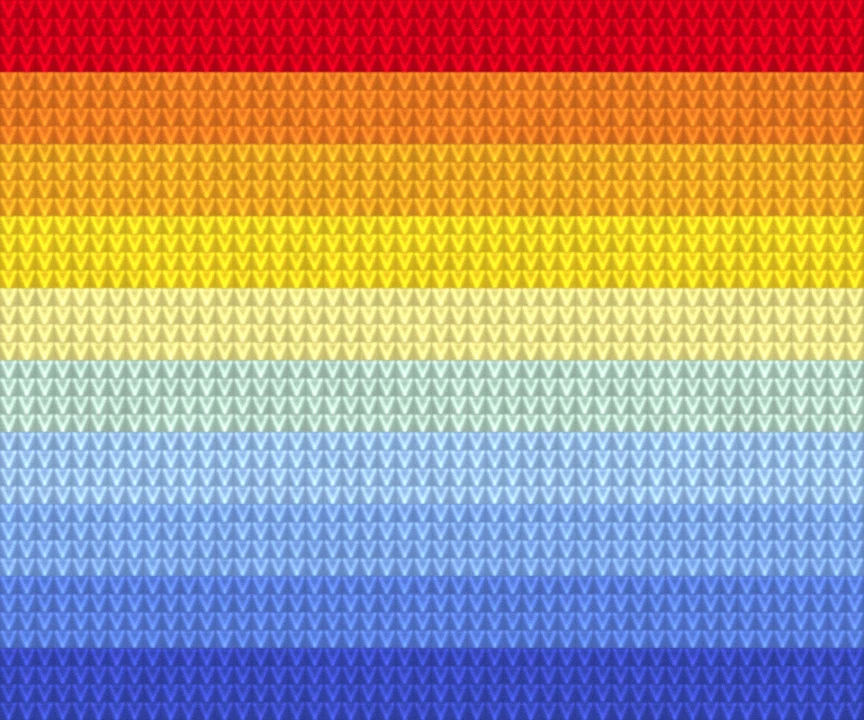
Simulated stitch texture from the chart grid — not a photo.

Classic 10-Shade Scale

Difficulty
Easy
Technique
Stripe rows (any stitch)
Chart size
48 × 40 (sample layout)
Colors
10
Yarn needed
year blanket ≈ 2,500–3,500 yds
Source
Original pixel design

The traditional blue-to-red scale in 10 shades — enough resolution to see a heat wave, few enough to stay coherent.

Download chart (PNG) ⬇️
Written instructions (row by row)

Work from the bottom up. Odd rows are the right side (worked right-to-left), even rows the wrong side (left-to-right). Tap a row to mark it done — the chart shades it too.

reddark orangeorangegolden yellowpale yellowmintpale bluelight blueblueroyal blue
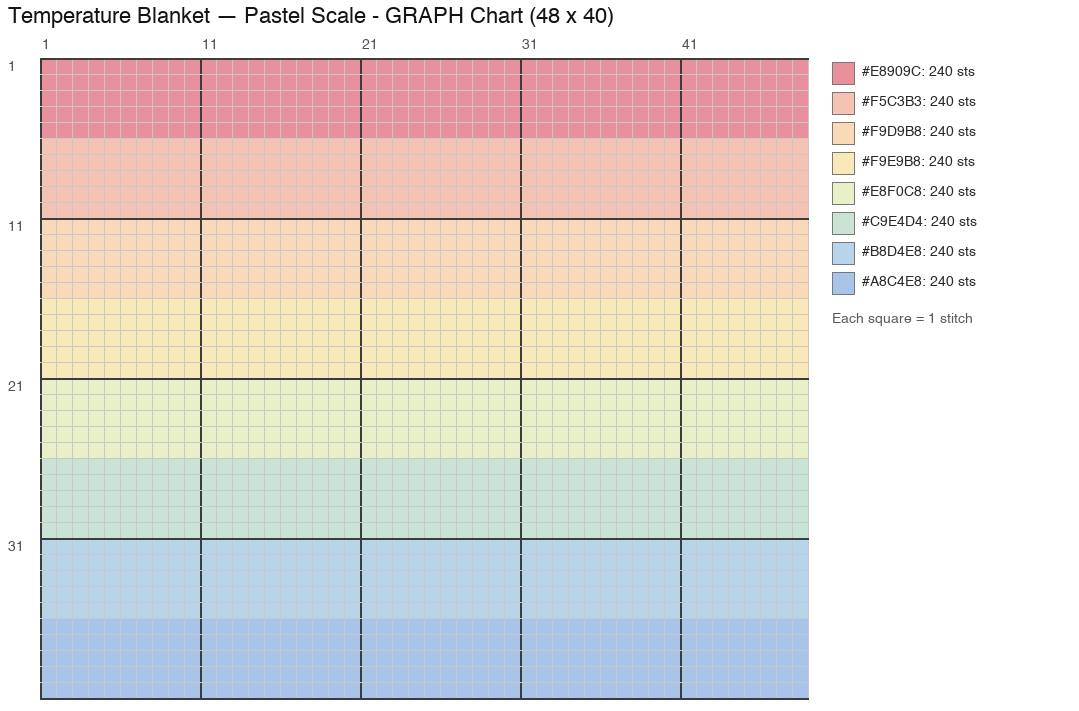
Digital preview
Pastel 8-Shade Scale crochet chart, 48 × 40 (sample layout), 8 colors

40 rows

Click the chart to jump to a row · Progress saves in your browser — no account needed 💕

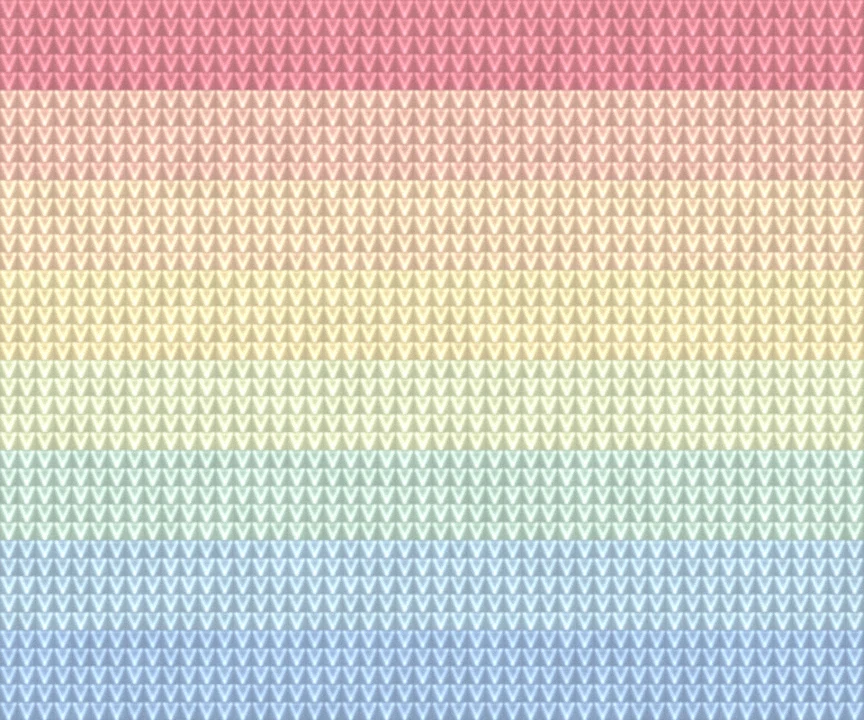
Rendered previewPastel 8-Shade Scale as worked crochet fabric — simulated stitch texture

Simulated stitch texture from the chart grid — not a photo.

Pastel 8-Shade Scale

Difficulty
Easy
Technique
Stripe rows (any stitch)
Chart size
48 × 40 (sample layout)
Colors
8
Yarn needed
year blanket ≈ 2,500–3,500 yds
Source
Original pixel design

Soft nursery-friendly pastels. Fewer, broader bands — the calmest-looking temperature blanket.

Download chart (PNG) ⬇️
Written instructions (row by row)

Work from the bottom up. Odd rows are the right side (worked right-to-left), even rows the wrong side (left-to-right). Tap a row to mark it done — the chart shades it too.

rose pinkpeachpale peachpale yellowpale greenpale mintpale bluelight blue
Digital preview
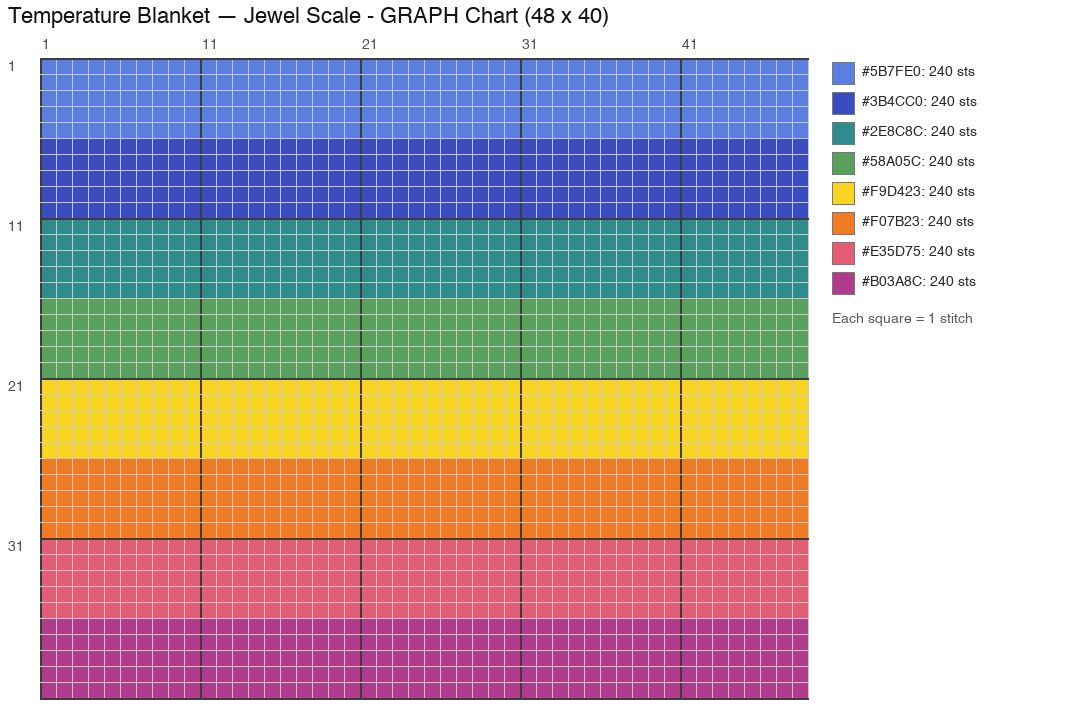
Jewel 9-Shade Scale crochet chart, 48 × 40 (sample layout), 9 colors

40 rows

Click the chart to jump to a row · Progress saves in your browser — no account needed 💕

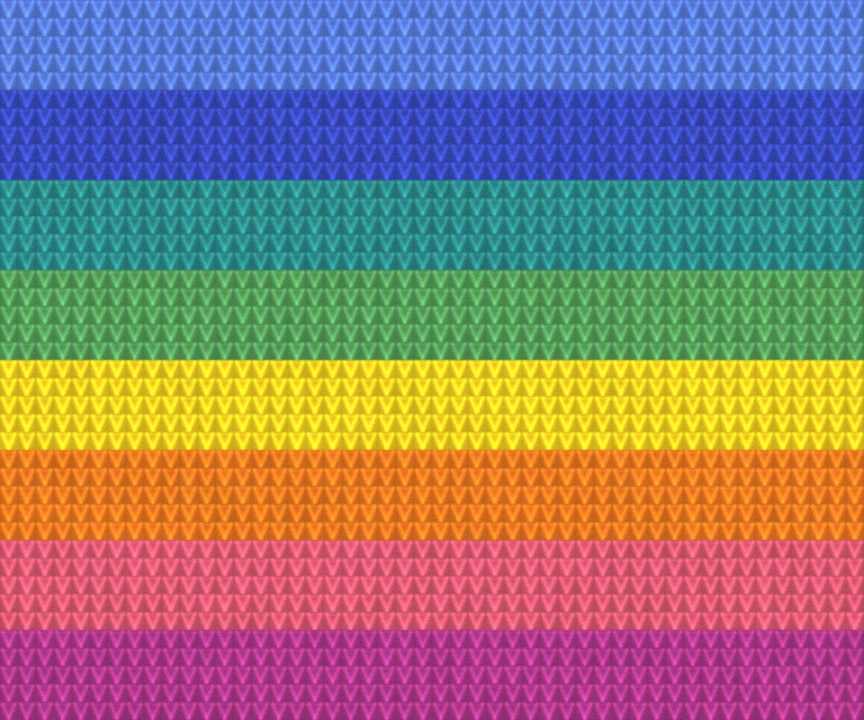
Rendered previewJewel 9-Shade Scale as worked crochet fabric — simulated stitch texture

Simulated stitch texture from the chart grid — not a photo.

Jewel 9-Shade Scale

Difficulty
Easy
Technique
Stripe rows (any stitch)
Chart size
48 × 40 (sample layout)
Colors
9
Yarn needed
year blanket ≈ 2,500–3,500 yds
Source
Original pixel design

Rich jewel tones from magenta-cold to sapphire-warm — the dramatic option, and the best at hiding slight tension wobbles.

Download chart (PNG) ⬇️
Written instructions (row by row)

Work from the bottom up. Odd rows are the right side (worked right-to-left), even rows the wrong side (left-to-right). Tap a row to mark it done — the chart shades it too.

blueroyal bluedeep tealleaf greengolden yellowdark orangerose redmagenta

How to crochet it

  1. Gather your materials

    Worsted weight (#4) yarn in every shade of your chosen scale — 10 for the classic, 8 for the pastel, 9 for the jewel — plus a 5.0 mm (H/8) hook, a tapestry needle, and scissors. Buy one skein per shade to start; a year blanket totals ≈ 2,500–3,500 yds, and the mid-range shades always run out first.

  2. Check the finished size

    Plan on 120–150 stitches across for a throw width. One single crochet row per day lands near 120–140 cm long by December 31st — at the standard 18 rows = 10 cm gauge you can check any month's growth against your tape measure.

  3. Set your ranges and work one row per day

    Map the scale's shades to your local highs — 5–8°F (3–4°C) per band is the sweet spot for most climates — then crochet one row daily in the day's color. Each temperature blanket chart shows the full scale plus a sample layout, so every color decision is made before January 1st; one row at 120 stitches is ~10 minutes.

  4. Change colors cleanly

    A new day can mean a new shade: finish the last stitch of the row with the new color, cut the old one, and leave tails to weave. Weave the ends weekly — 365 rows of ends in December is the one way this project turns grim.

  5. Log, then add a border

    Write the day's high in a tracker (a note on your phone works) and catch up weekly — the blanket forgives a busy weekend, not a lost month. At year's end, work one round of single crochet around the blanket in a neutral shade with 3 sc in each corner, then give it a light block.

  6. Turn it into a finished piece

    By December 31st your temperature blanket crochet pattern has become a stripe-by-stripe diary of your local weather. Start on New Year, a birthday, or any date worth recording — a 'year of our baby' blanket runs from date to date the same way, and it's the most personal gift in crochet.

Make your own chart

Have a photo you love? The free generator turns it into a stitch-ready chart — grid, palette, and stitch counts included.

Frequently asked questions

What is a temperature blanket?

A year-long project where you crochet one row (or two) every day, choosing the color from a fixed scale based on that day's high temperature. By December 31st the blanket is a stripe-by-stripe record of your local weather.

How much yarn do I need for a temperature blanket?

For a daily single crochet row at throw width (120–150 stitches) in worsted: roughly 2,500–3,500 yards total. Buy one skein per shade to start, restock the mid-range shades mid-year — those always run out first.

How do I set the temperature ranges?

Look up last year's daily highs for your city and divide the spread into bands of 5–8°F (3–4°C) each. More bands in the temps you get most often — if your year is mostly 60–80°F, split that range finely and give extremes one shade each.

What stitch is best for a temperature blanket?

Single crochet is the classic: one row per day keeps the blanket near 48–55 inches long by year's end. Linen/moss stitch is prettier and denser but slower; Tunisian simple stitch is fast and flat. Avoid tall stitches — 365 rows of double crochet becomes a bedspread.

Can I start a temperature blanket mid-year?

Yes — start on any meaningful date (birthday, anniversary, New Year is just tradition). A 'year of our baby' or 'year one of marriage' blanket runs from date to date the same way.