CrochetPatternGen

Ripple Blanket Crochet Patterns

The classic chevron, charted and counted — three colorways of the most relaxing repeat in crochet.

The ripple (chevron) is the blanket that hooks people on crochet: a hypnotic zigzag that looks like expert work and is secretly just increases and decreases on a one-row repeat. These three colorways are charted with the full zigzag repeat — every stitch of the wave counted so you can scale it to any width.

Blush for the nursery, ocean for the sofa, sage for everywhere else. Same chart, same meditative rhythm.

The free charts

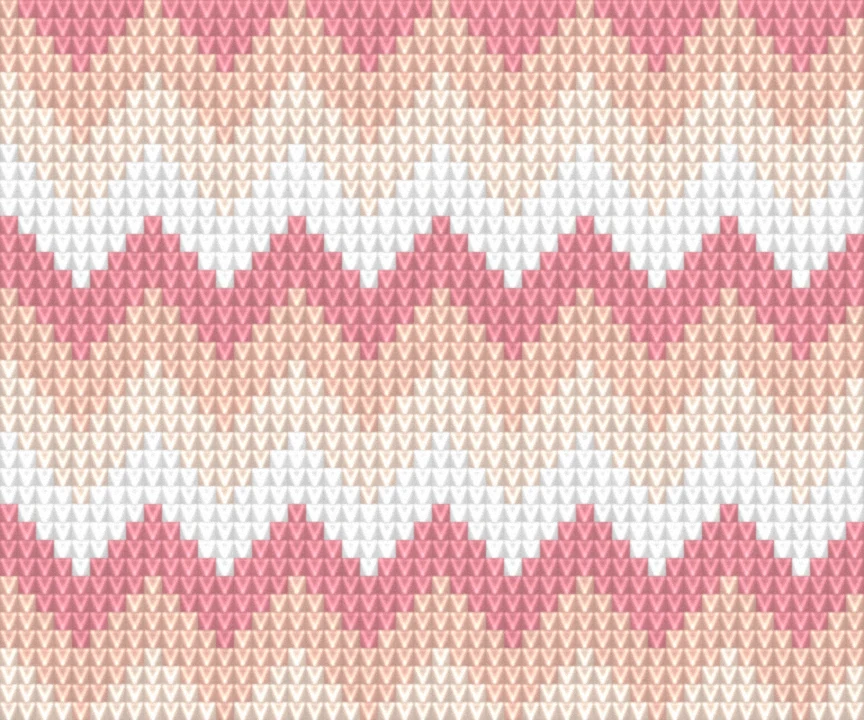
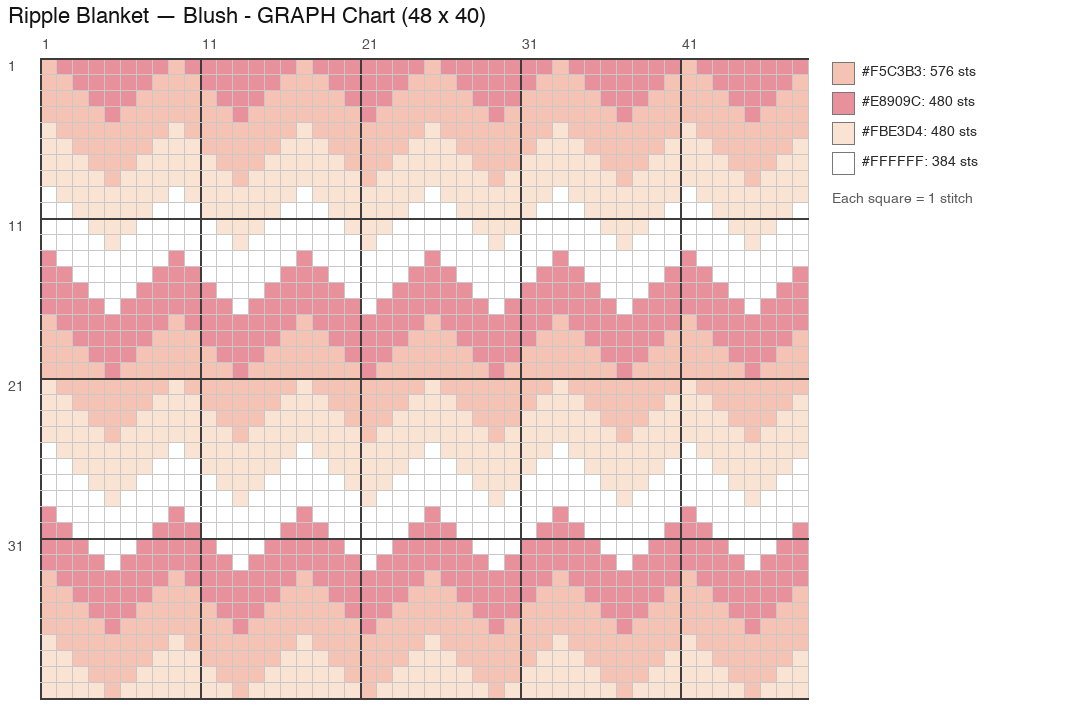
Digital previewRipple — Blush crochet chart, 48 × 40 (one repeat), 4 colors

Ripple — Blush

Difficulty
Easy
Technique
Single crochet ripple
Chart size
48 × 40 (one repeat)
Colors
4
Yarn needed
throw ≈ 2,800–3,200 yds
Source
Original pixel design

Rose-to-cream waves — soft without being sugary. The chart shows one full chevron repeat plus the turn.

Download chart (PNG) ⬇️
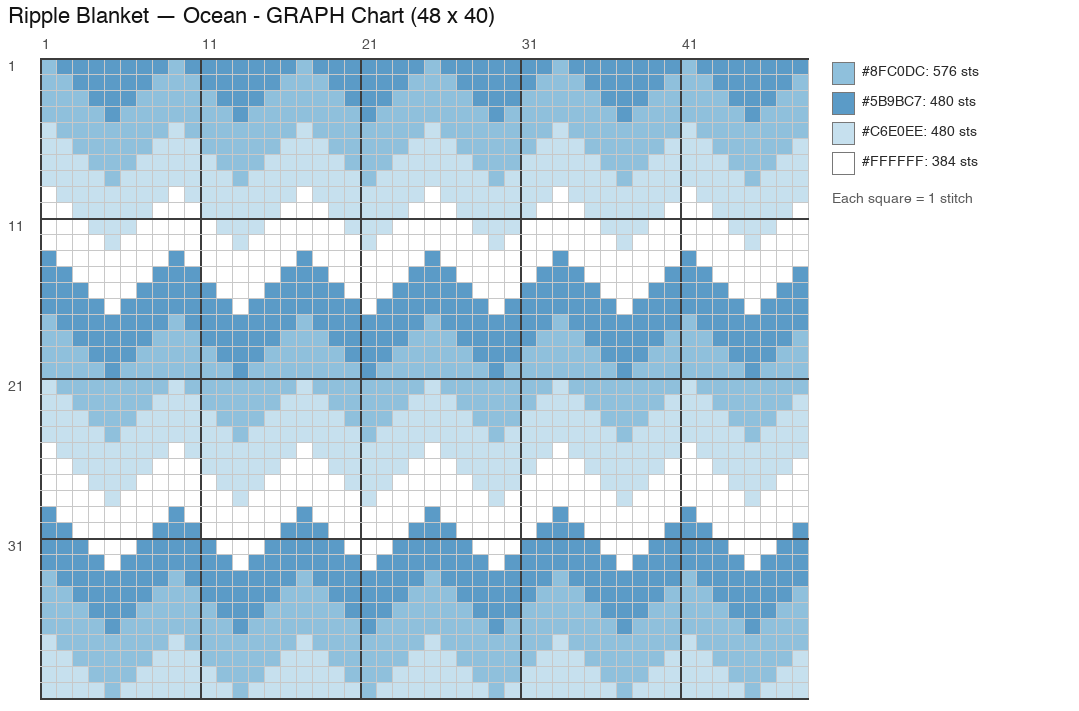
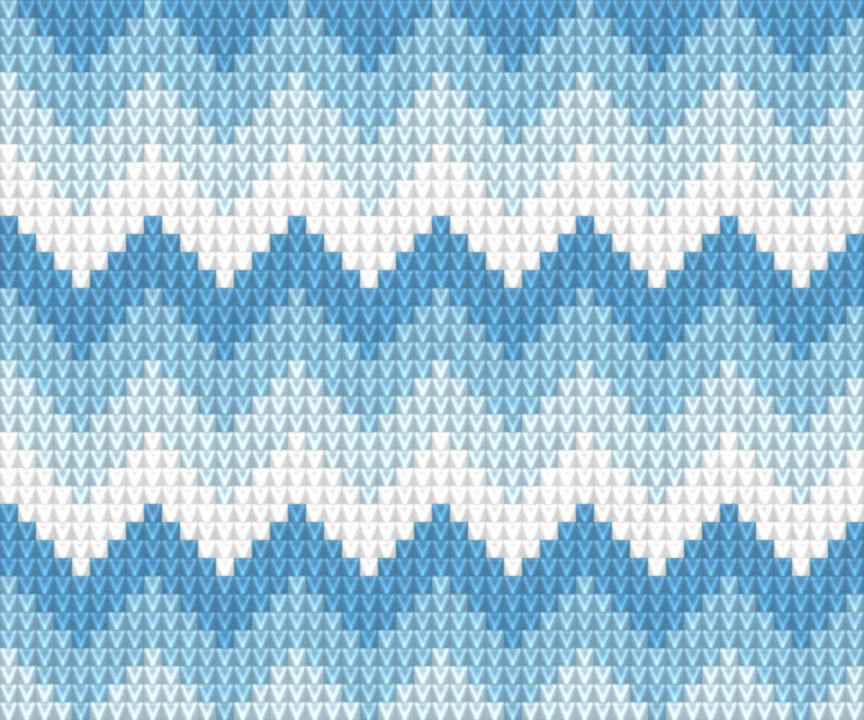
Digital previewRipple — Ocean crochet chart, 48 × 40 (one repeat), 4 colors

Ripple — Ocean

Difficulty
Easy
Technique
Single crochet ripple
Chart size
48 × 40 (one repeat)
Colors
4
Yarn needed
throw ≈ 2,800–3,200 yds
Source
Original pixel design

Deep blue to seafoam. The most forgiving colorway — tension wobbles vanish into the dark-to-light flow.

Download chart (PNG) ⬇️
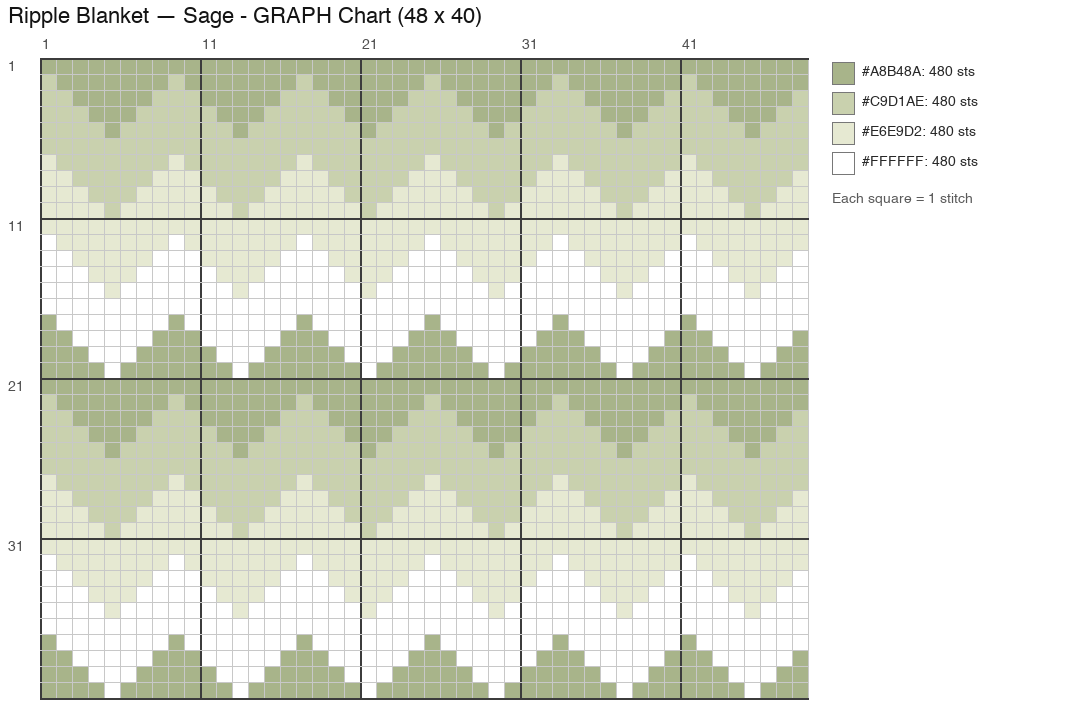
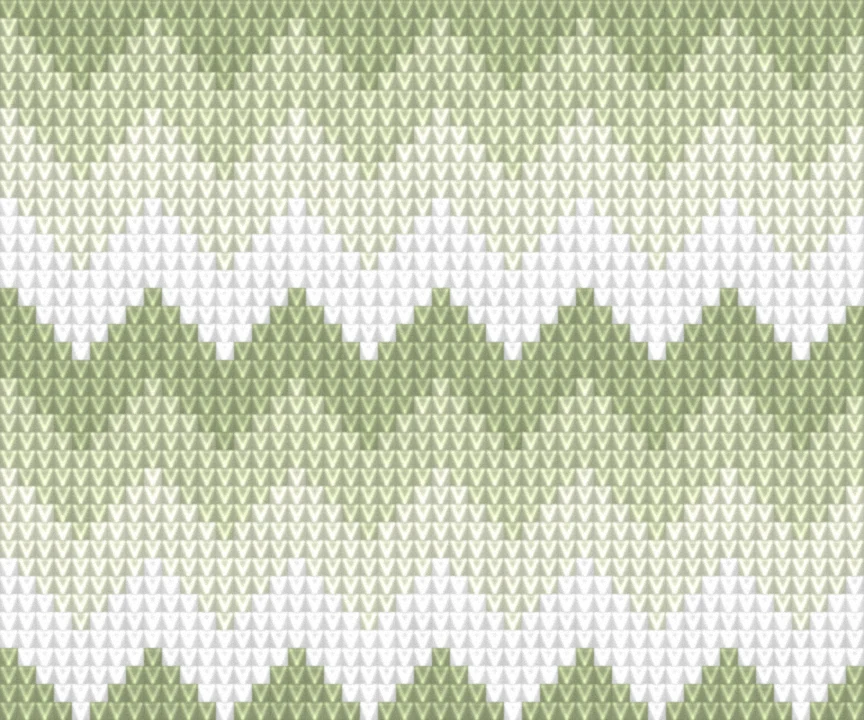
Digital previewRipple — Sage crochet chart, 48 × 40 (one repeat), 4 colors

Ripple — Sage

Difficulty
Easy
Technique
Single crochet ripple
Chart size
48 × 40 (one repeat)
Colors
4
Yarn needed
throw ≈ 2,800–3,200 yds
Source
Original pixel design

Garden sage and cream, the neutral that works in every room. Same chart as the other two colorways.

Download chart (PNG) ⬇️

How to crochet it

  1. Learn the one-row repeat

    A ripple is peaks (increases) and valleys (decreases) evenly spaced. Work 10 cm of the chart once and your hands will know it forever.

  2. Chain a multiple of the repeat

    The wave repeat is fixed by the chart — chain in multiples of the repeat plus turning chains. Swatch to get stitches-per-cm, then multiply for your blanket width.

  3. Change colors on the wave

    Color bands follow the rows — change at the end of a row, carry the unused color up the side if the band returns soon, weave ends as you go.

Make your own chart

Have a photo you love? The free generator turns it into a stitch-ready chart — grid, palette, and stitch counts included.

Frequently asked questions

Is a ripple blanket hard to crochet?

It's rated easy for a reason: the entire pattern is one repeated row of increases and decreases. If you can single crochet, you can ripple. The first five rows need counting; after that it's muscle memory.

How do I figure out the starting chain for a ripple blanket?

Chain a multiple of the pattern repeat plus a few for turning. Practical method: work one full repeat from the chart, measure its width in your yarn, then divide your target blanket width by the repeat width and chain that many repeats.

Why does my ripple keep getting wider (or narrower)?

You're adding or losing a stitch at the peaks or valleys — the classic ripple trap. Count the stitches between one increase and the next decrease for a few rows; put a stitch marker at each peak until the wave is automatic.

What's the best yarn for a ripple blanket?

Worsted-weight acrylic in 3–5 colors. The ripple shows off color transitions beautifully, so pick a palette with a light-to-dark flow. Self-striping yarn also works and removes all the color changes.

Can I make the chevron sharper or softer?

Yes — sharper peaks mean more stitches in the increase point (3-in-1 instead of 2-in-1), softer waves mean fewer. The charts here use the classic balanced wave; adapt the peak once you're comfortable with the repeat.