CrochetPatternGen

A Crochet Blanket Pattern You Can Actually Follow

No vague instructions, no missing counts — each chart is a complete blanket plan: grid, palette, and stitch counts.

The problem with most blanket patterns isn't skill — it's the pattern. Vague repeats, unstated yardage, color changes you discover too late. These charts work differently: the whole design is a counted grid, so you always know the next stitch and exactly how much yarn each color needs.

Three styles below, three different commitments: the ripple for meditative evenings, the granny square for portable progress, the gingham for the fastest finish in crochet.

The free charts

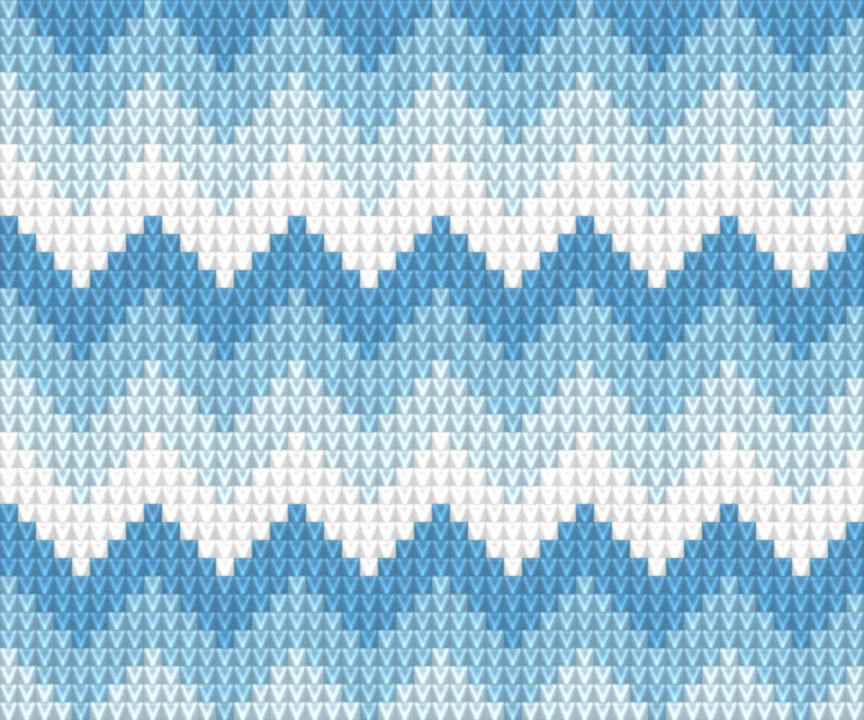
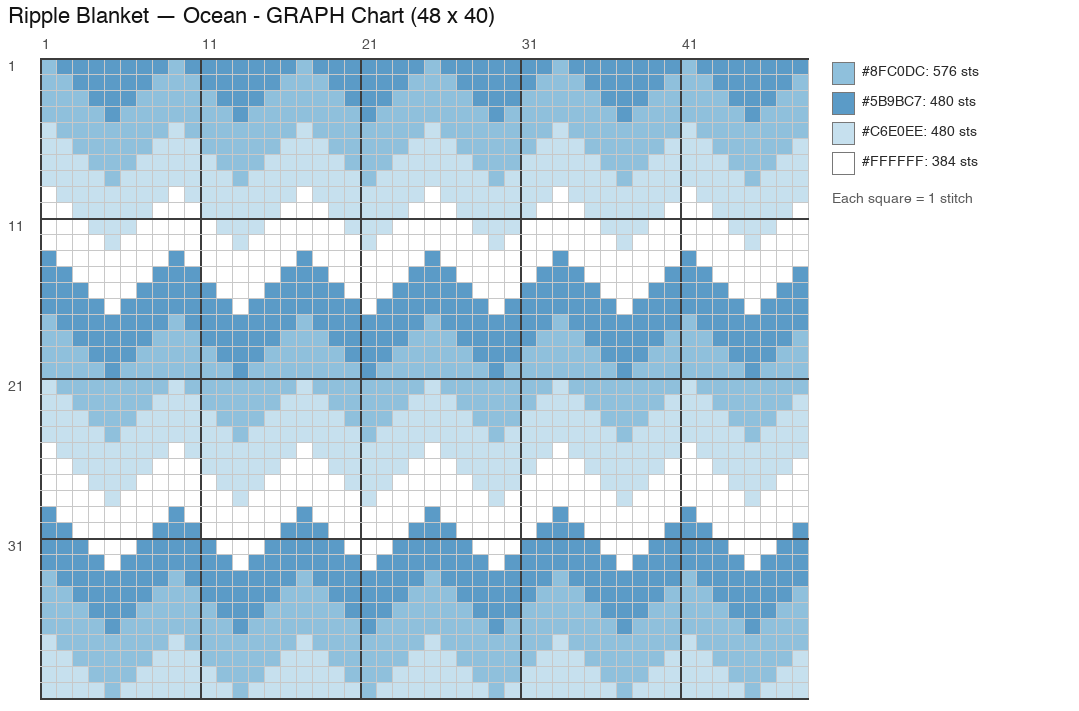
Digital previewRipple Blanket — Ocean crochet chart, 48 × 40 (one repeat), 4 colors

Ripple Blanket — Ocean

Difficulty
Easy
Technique
Single crochet ripple
Chart size
48 × 40 (one repeat)
Colors
4
Yarn needed
throw ≈ 2,800–3,200 yds
Source
Original pixel design

Deep-to-pale ocean blues in the classic zigzag. One chevron repeat on the chart; work it across to any width.

Download chart (PNG) ⬇️
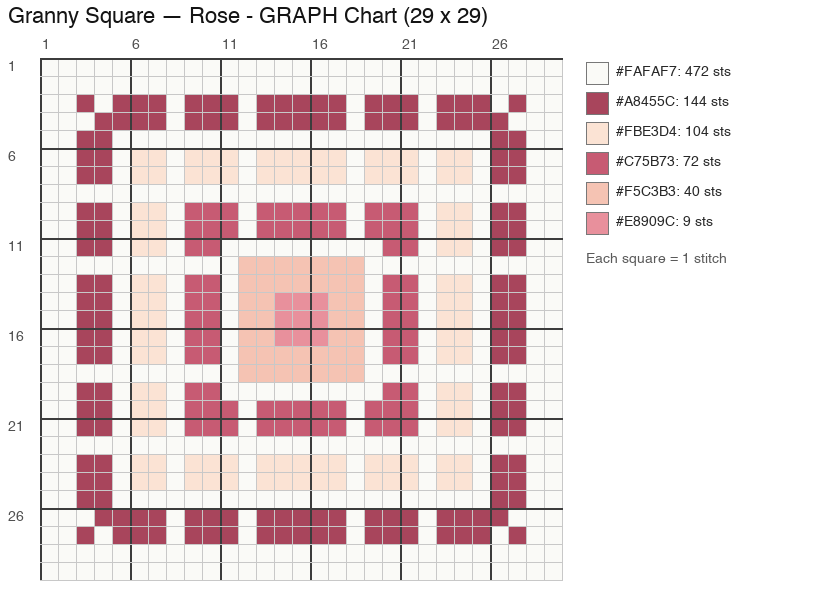
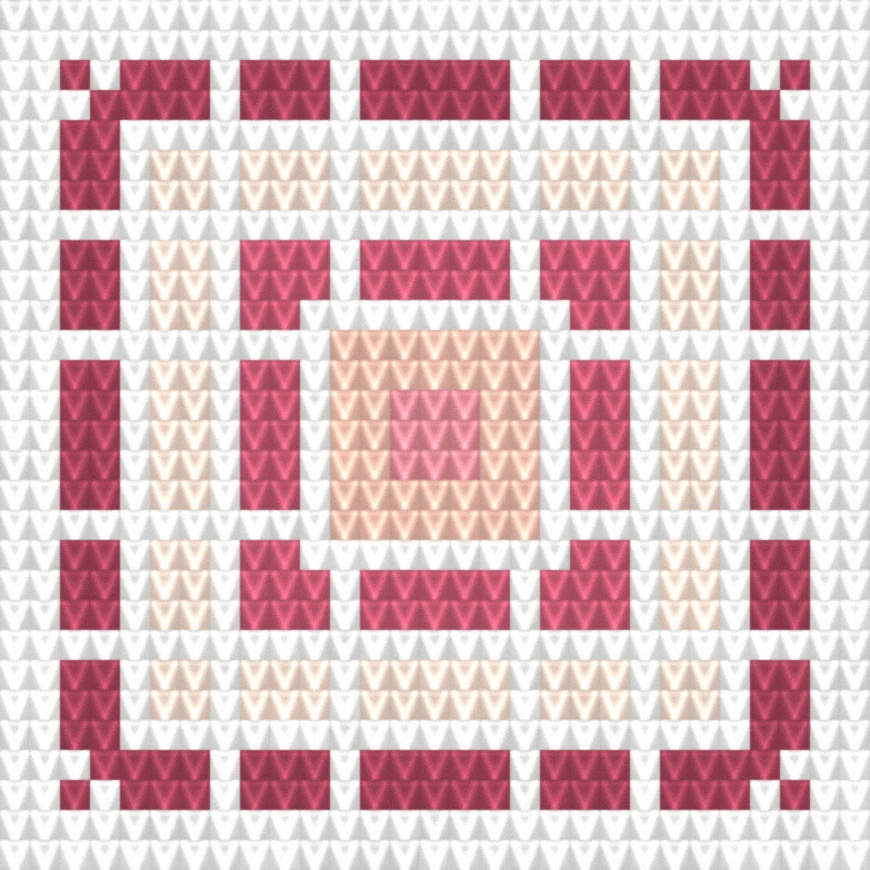
Digital previewGranny Square — Rose crochet chart, 29 × 29 (one square), 6 colors

Granny Square — Rose

Difficulty
Easy
Technique
Granny square (join-as-you-go)
Chart size
29 × 29 (one square)
Colors
6
Yarn needed
≈ 60 yds per square
Source
Original pixel design

A romantic rose-palette granny — five shades of pink and cream. Perfect stash-buster, one square per evening.

Download chart (PNG) ⬇️
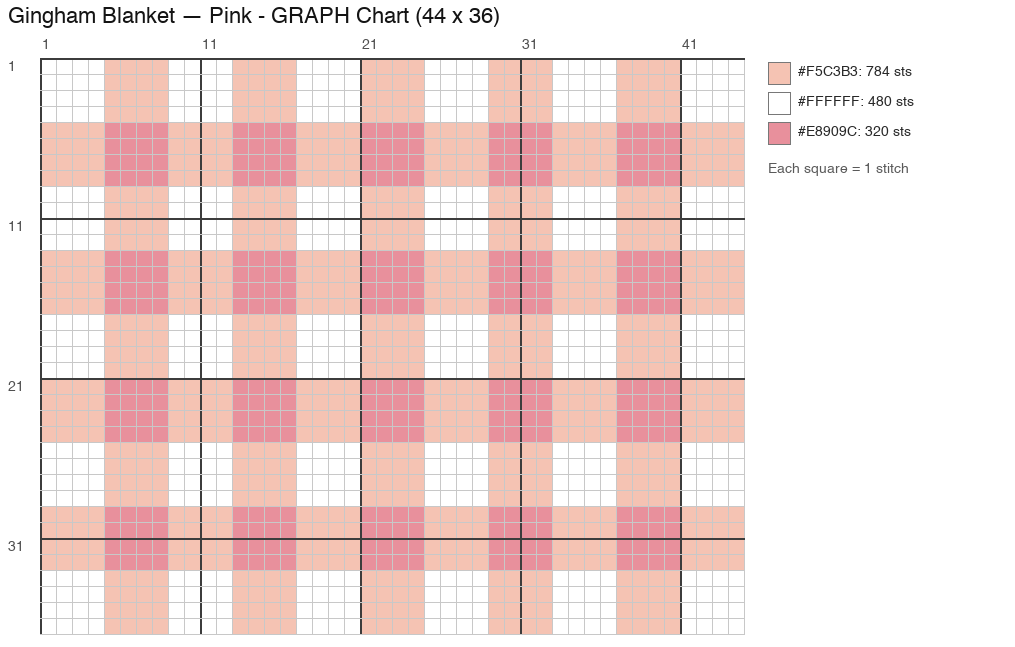
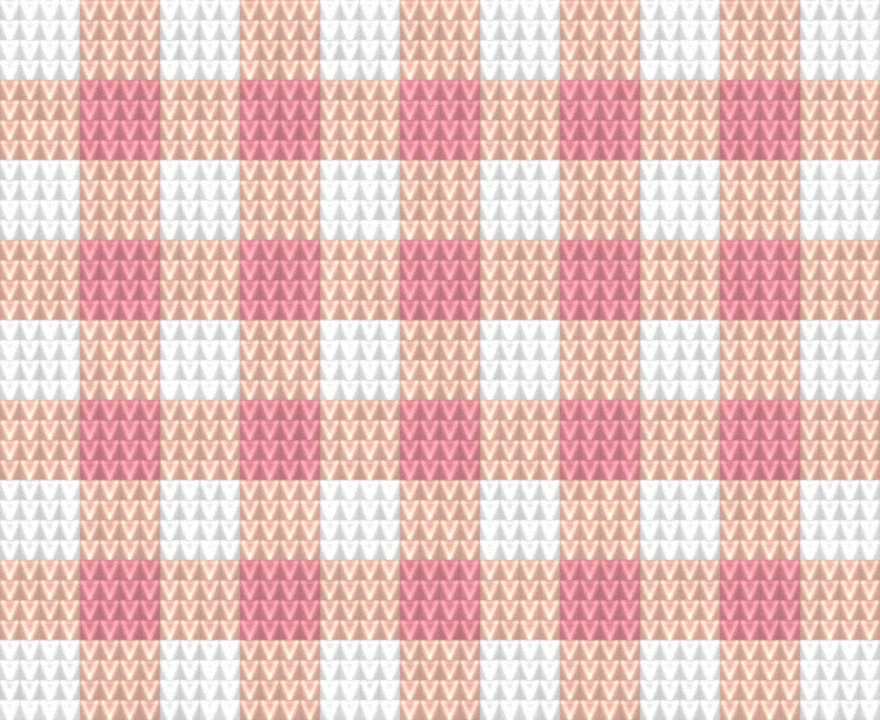
Digital previewGingham Blanket — Pink crochet chart, 44 × 36 (section), 3 colors

Gingham Blanket — Pink

Difficulty
Beginner
Technique
Single crochet blocks (carry yarn)
Chart size
44 × 36 (section)
Colors
3
Yarn needed
throw ≈ 2,500–3,000 yds
Source
Original pixel design

The picnic-blanket classic. Three colors carried inside the stitches — no sewing, no ends, just a steady rhythm.

Download chart (PNG) ⬇️

How to crochet it

  1. Download a chart

    Each chart is the full plan: grid, palette, and per-color stitch counts. Print it or keep it on your phone while you work.

  2. Swatch, then scale

    Work 10 cm of the pattern, measure it, and scale to your blanket size. The yarn calculator converts your total stitch count into skeins per color.

  3. Settle into the repeat

    Blanket charts are meditative by design — the pattern tells you what's next, every stitch, no counting anxiety.

Make your own chart

Have a photo you love? The free generator turns it into a stitch-ready chart — grid, palette, and stitch counts included.

Frequently asked questions

What is the easiest crochet blanket pattern?

The gingham: single crochet with three carried colors in big blocks — no shaping, no counting beyond the block width. A granny square is the other classic answer, because irregularities disappear into the texture.

How many chains do I need for a blanket?

Measure your gauge instead of trusting a number: chain 20, crochet 10 rows, measure the width, then scale. In worsted yarn with a 5 mm hook, most crocheters get 7–8 cm per 10 single crochet — so a 120 cm throw starts around 150–170 chains.

What's the best yarn for a crochet blanket?

Worsted-weight (#4) acrylic for everyday blankets: cheap, soft, machine-washable, and available everywhere. Cotton for summer and drape; chenille-style for instant coziness (but harder frogging). Buy one dye lot, plus an extra skein.

Are these charts free to use?

Yes, free for personal use — download, print, and stitch. They're original designs made for this site.

Can I turn my own idea into a blanket pattern?

Yes — upload a photo or image to the pattern generator and it becomes a stitch grid with counted colors. For geometric ideas like the gingham and ripple, the blanket charts on this page show the repeat to adapt.