CrochetPatternGen

Filet Crochet Patterns (Free Charts)

Five vintage-style silhouettes read straight off the mesh — a rose, a heart, a butterfly, a cat, and a stag — each with filled-block counts and thread advice.

Filet is the oldest picture-making technique in crochet: a mesh of filled and open blocks where the silhouette does all the work. These five free filet crochet patterns are drawn in that vintage tradition — bold single-color shapes that read from across the room, sized 19–27 blocks wide so each one is a few evenings, not a month. Every chart lists its filled-block count, so you know the commitment before you chain.

Each square on the chart is one mesh block: filled blocks (3 double crochet) make the picture, open blocks (chain 2 + double crochet) make the lace background. Work them in size 10 thread for doilies and runners, or worsted yarn for pillow panels — the charts don't change, only the gauge does. Swap ecru for charcoal and the same charts read modern. And when you want your own silhouette, the free filet crochet pattern generator reduces any bold image to blocks with exact counts.

The free charts

Digital preview
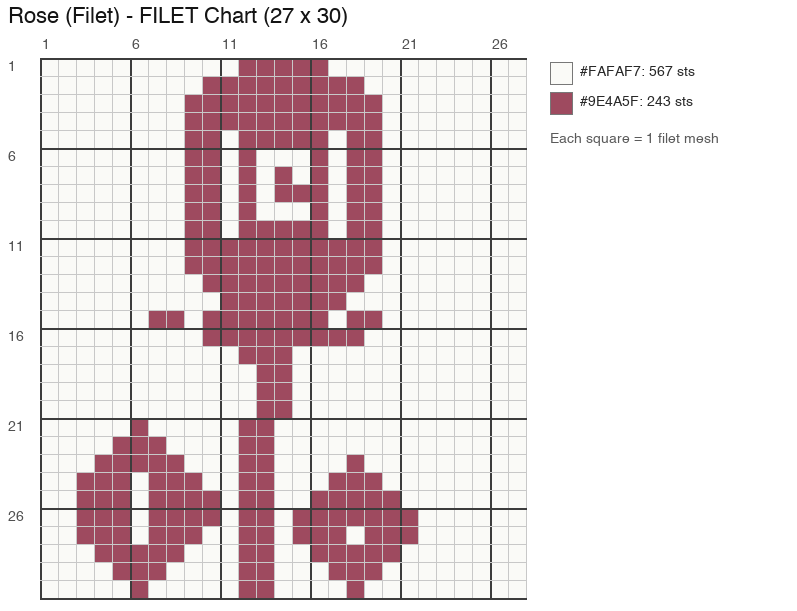
Rose (Filet) crochet chart, 27 × 30 blocks, 2 colors

30 rows

Click the chart to jump to a row · Progress saves in your browser — no account needed 💕

Rendered previewRose (Filet) as worked crochet fabric — simulated stitch texture
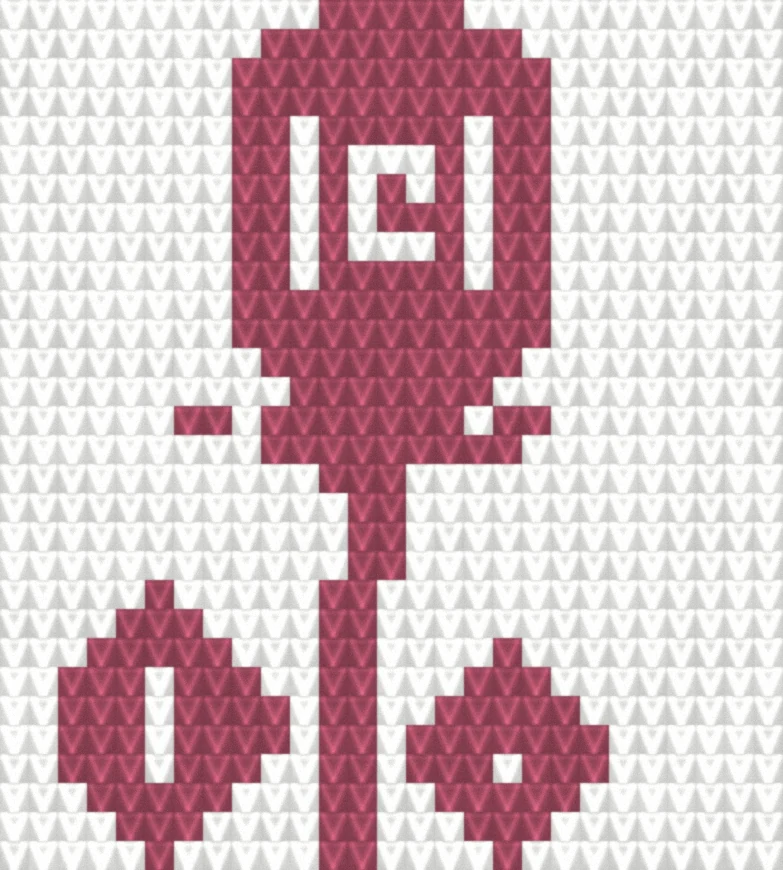
Simulated stitch texture from the chart grid — not a photo.

Finished lookRose (Filet) — finished crochet piece inspiration
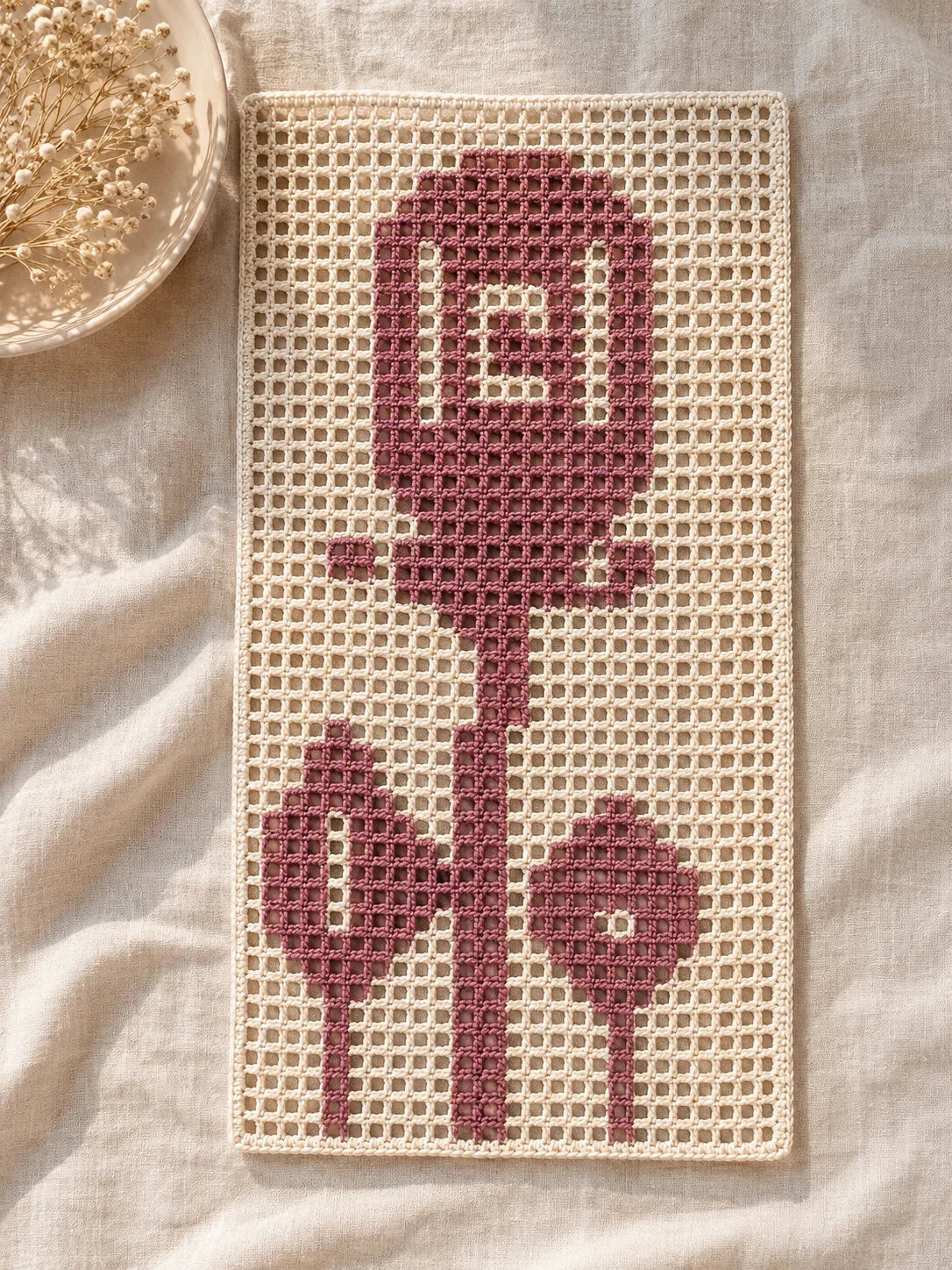
Rose (Filet)

Difficulty
Easy
Technique
Filet mesh (filled/open blocks)
Chart size
27 × 30 blocks
Colors
2
Yarn needed
size 10 thread ≈ 45 yds
Source
Original pixel design

The classic vintage runner subject: a cupped rose with concentric open blocks suggesting the petals, two veined leaves, 243 filled blocks. The one to stitch when someone says filet crochet flower patterns — starch it and it lasts decades.

Download chart (PNG) ⬇️
Written instructions (row by row)

Work from the bottom up. Odd rows are the right side (worked right-to-left), even rows the wrong side (left-to-right). Tap a row to mark it done — the chart shades it too.

creamColor A
Digital preview
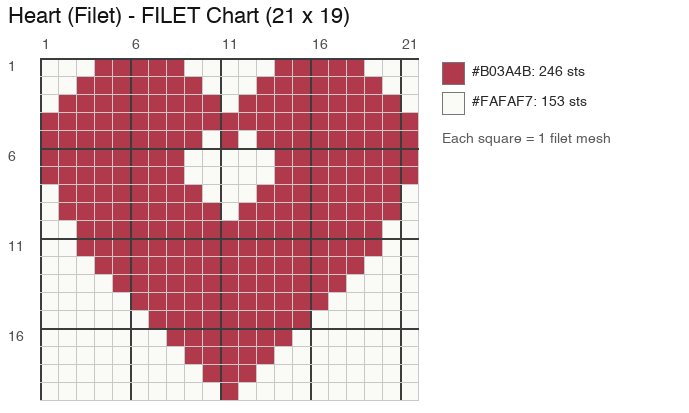
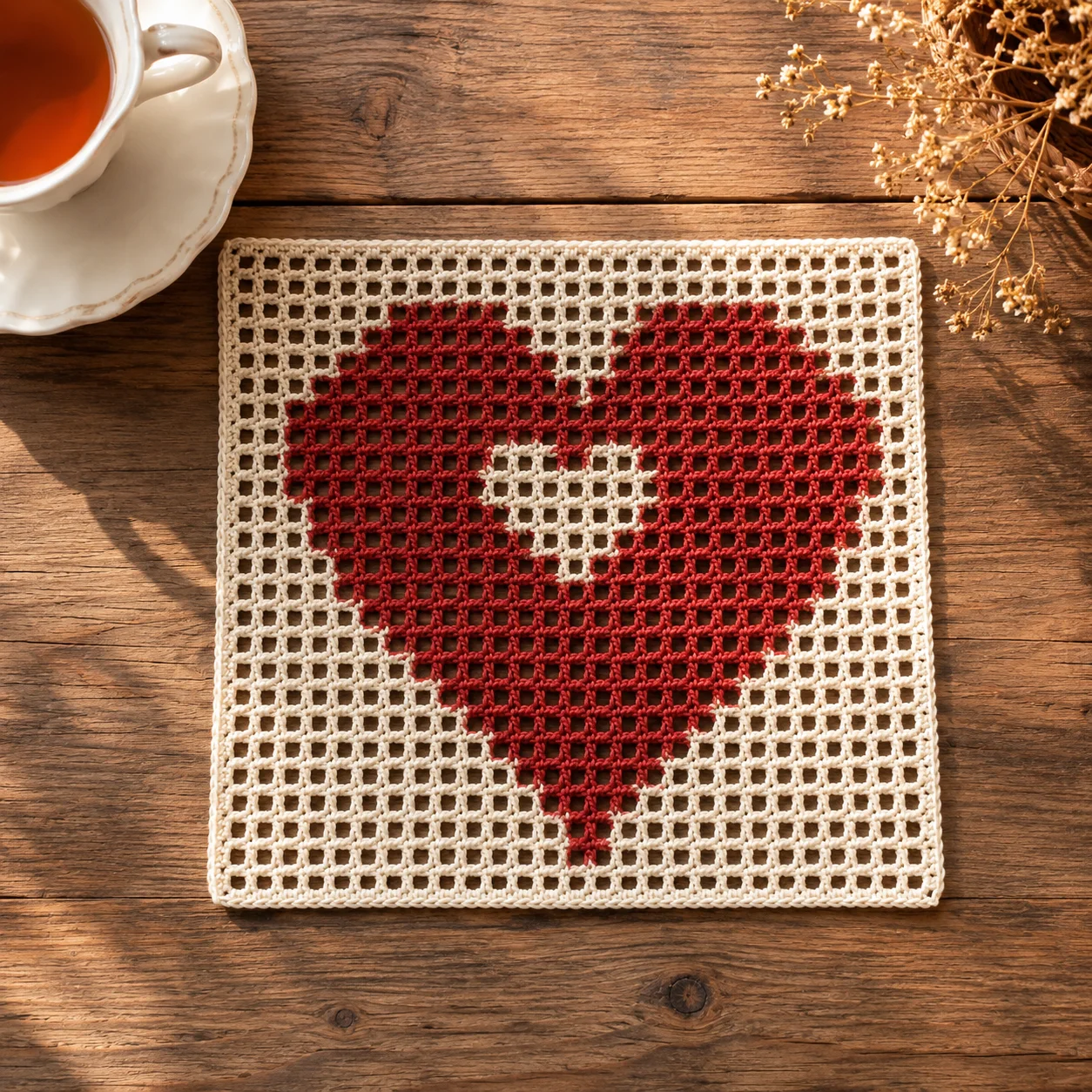
Heart (Filet) crochet chart, 21 × 19 blocks, 2 colors

19 rows

Click the chart to jump to a row · Progress saves in your browser — no account needed 💕

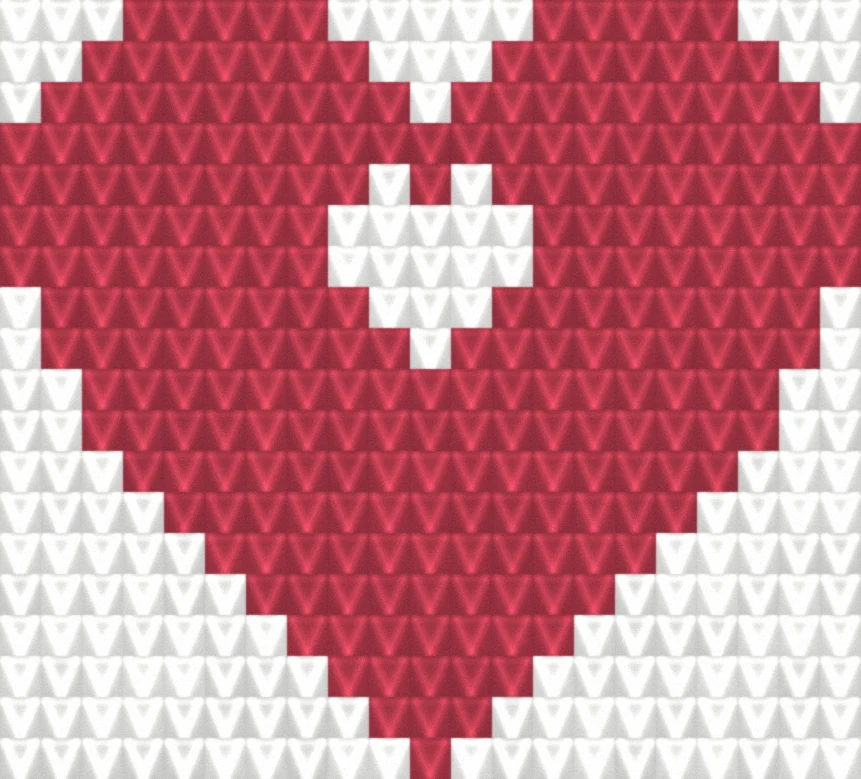
Rendered previewHeart (Filet) as worked crochet fabric — simulated stitch texture

Simulated stitch texture from the chart grid — not a photo.

Finished lookHeart (Filet) — finished crochet piece inspiration

Heart (Filet)

Difficulty
Beginner
Technique
Filet mesh (filled/open blocks)
Chart size
21 × 19 blocks
Colors
2
Yarn needed
size 10 thread ≈ 35 yds
Source
Original pixel design

246 filled blocks in long, forgiving runs — the easiest chart on this page and the natural first filet crochet heart. A cut-out baby heart floats in the center. Valentine's runner, wedding doily, or a first taste of the technique.

Download chart (PNG) ⬇️
Written instructions (row by row)

Work from the bottom up. Odd rows are the right side (worked right-to-left), even rows the wrong side (left-to-right). Tap a row to mark it done — the chart shades it too.

creamColor A
Digital preview
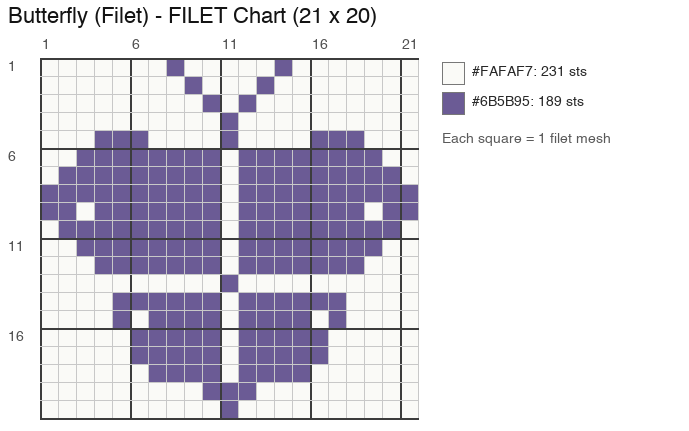
Butterfly (Filet) crochet chart, 21 × 20 blocks, 2 colors

20 rows

Click the chart to jump to a row · Progress saves in your browser — no account needed 💕

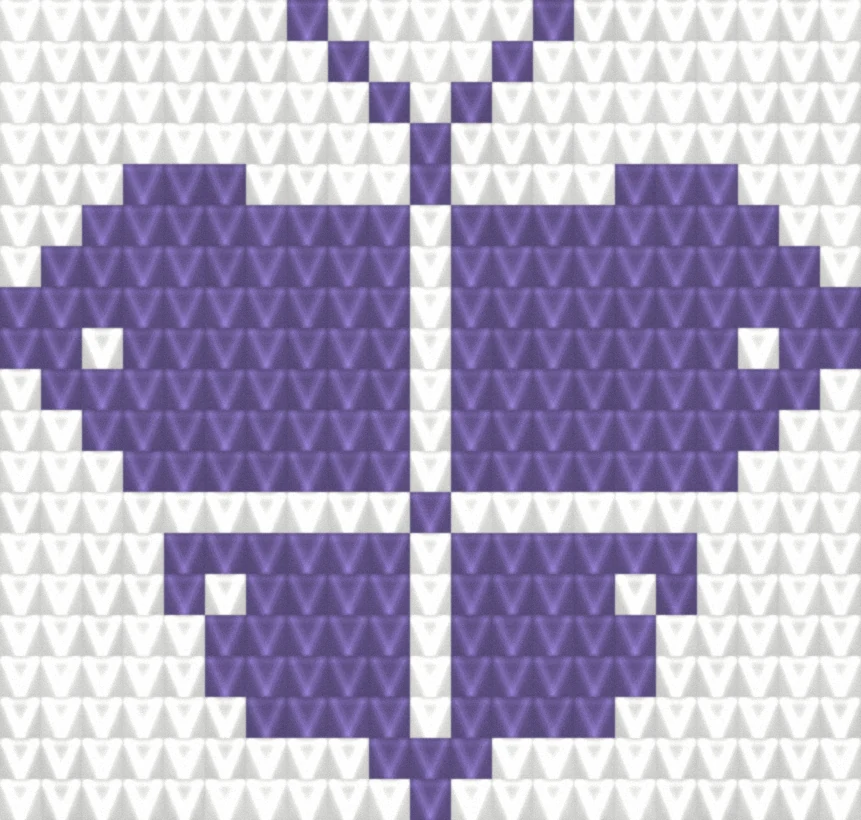
Rendered previewButterfly (Filet) as worked crochet fabric — simulated stitch texture

Simulated stitch texture from the chart grid — not a photo.

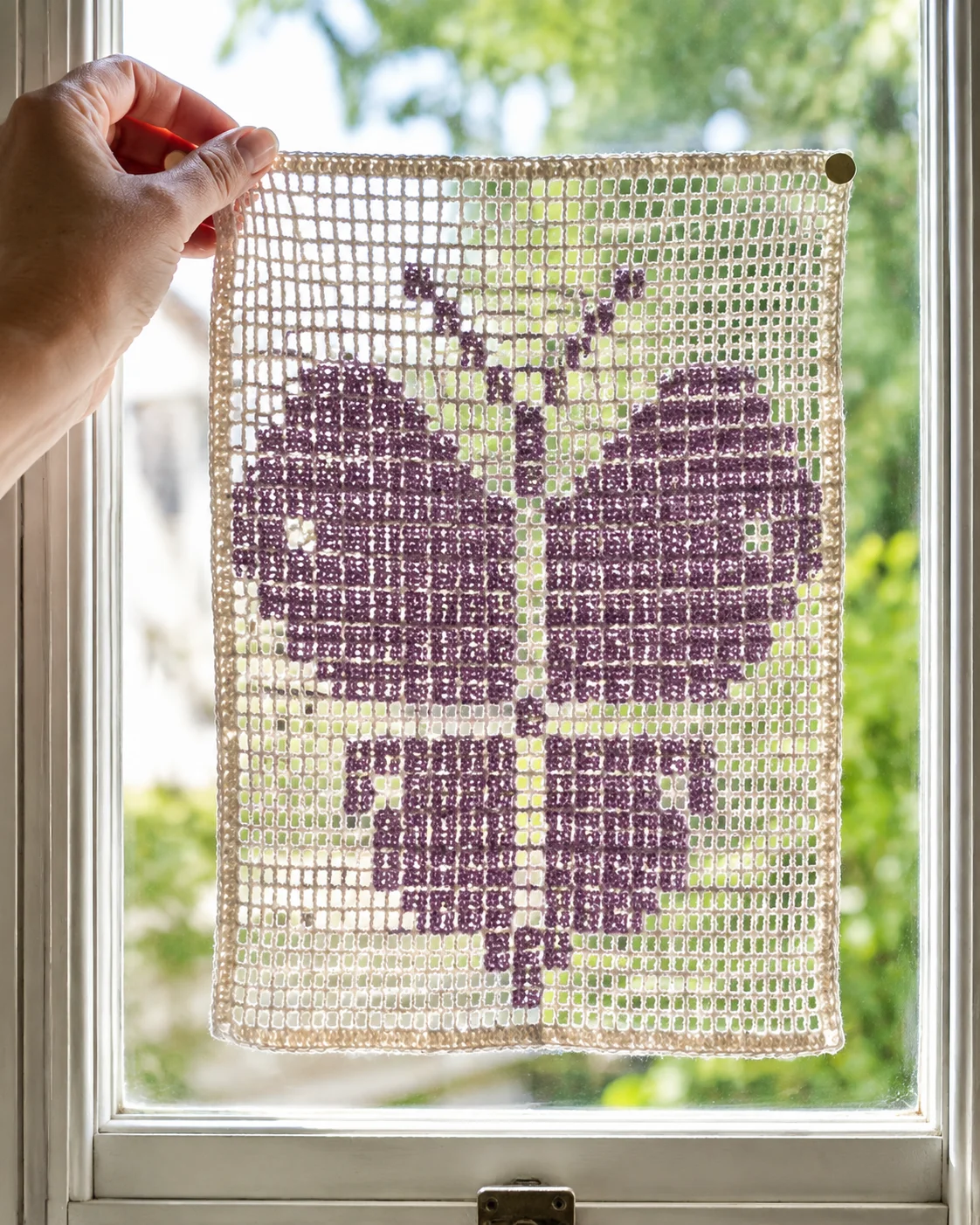
Finished lookButterfly (Filet) — finished crochet piece inspiration

Butterfly (Filet)

Difficulty
Beginner
Technique
Filet mesh (filled/open blocks)
Chart size
21 × 20 blocks
Colors
2
Yarn needed
size 10 thread ≈ 30 yds
Source
Original pixel design

Big upper wings, small lower wings, and a pinched waist — at 189 filled blocks it's the lightest stitch here. Perfect symmetry means a miscount shows up as a lopsided wing you can spot one row later.

Download chart (PNG) ⬇️
Written instructions (row by row)

Work from the bottom up. Odd rows are the right side (worked right-to-left), even rows the wrong side (left-to-right). Tap a row to mark it done — the chart shades it too.

creamColor A
Digital preview
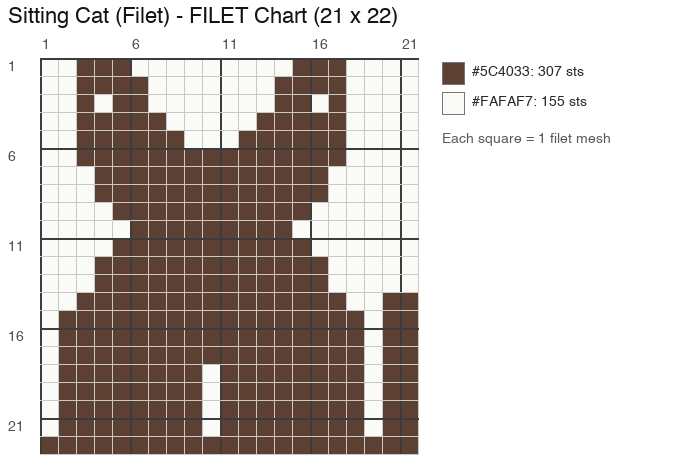
Sitting Cat (Filet) crochet chart, 21 × 22 blocks, 2 colors

22 rows

Click the chart to jump to a row · Progress saves in your browser — no account needed 💕

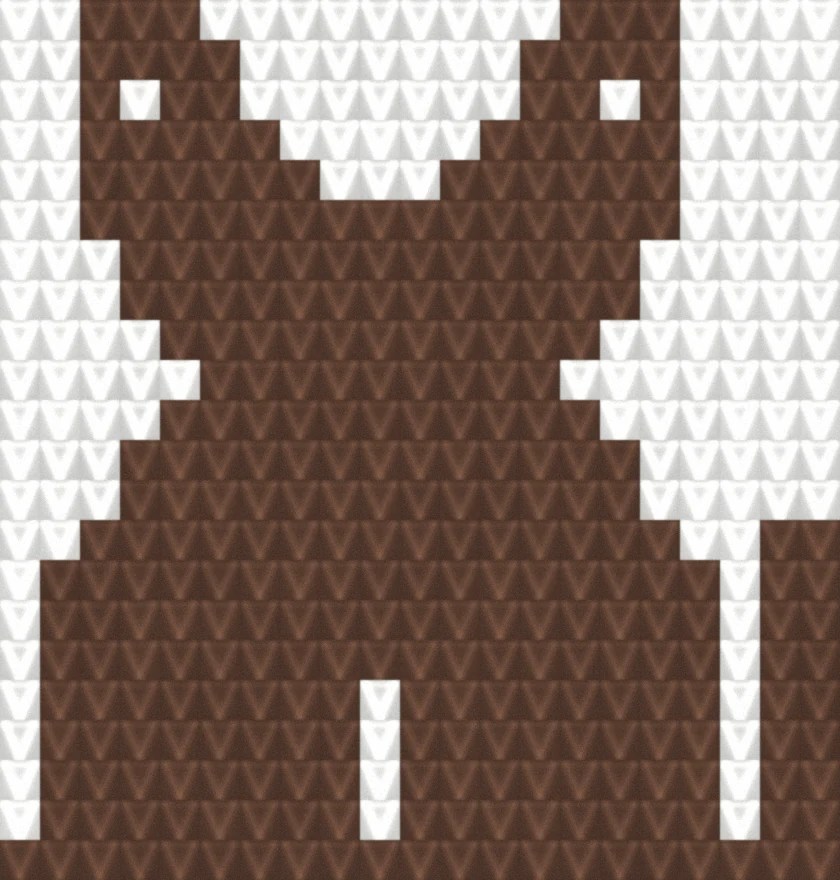
Rendered previewSitting Cat (Filet) as worked crochet fabric — simulated stitch texture

Simulated stitch texture from the chart grid — not a photo.

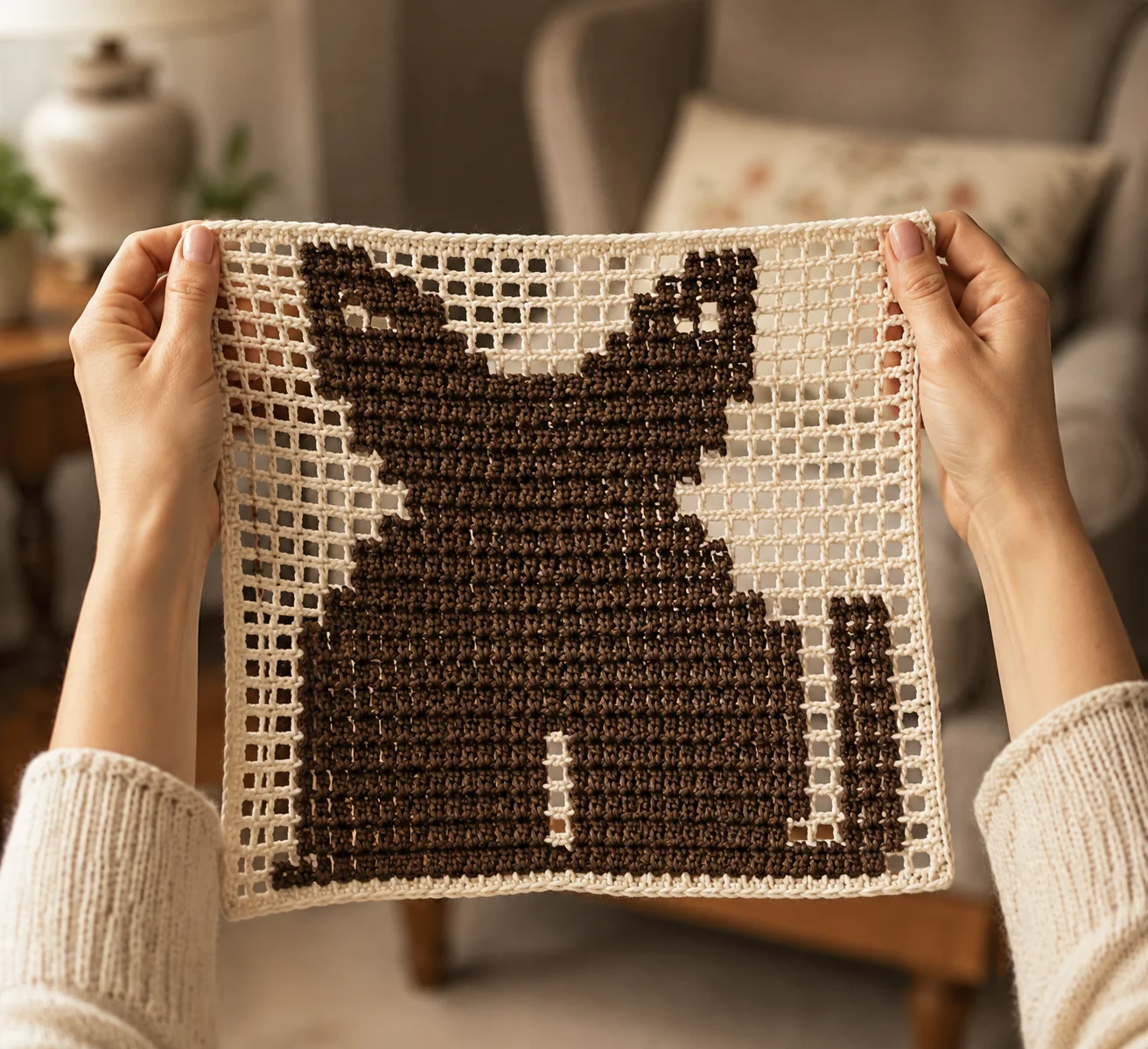
Finished lookSitting Cat (Filet) — finished crochet piece inspiration

Sitting Cat (Filet)

Difficulty
Easy
Technique
Filet mesh (filled/open blocks)
Chart size
21 × 22 blocks
Colors
2
Yarn needed
size 10 thread ≈ 40 yds
Source
Original pixel design

The cat filet crochet fans ask for: pricked ears, a pear-shaped body, two front-leg slits, and the tail wrapped around the side. 307 filled blocks, mostly in the body — work it in dark brown on ecru for the silhouette-cat look.

Download chart (PNG) ⬇️
Written instructions (row by row)

Work from the bottom up. Odd rows are the right side (worked right-to-left), even rows the wrong side (left-to-right). Tap a row to mark it done — the chart shades it too.

creamColor A
Digital preview
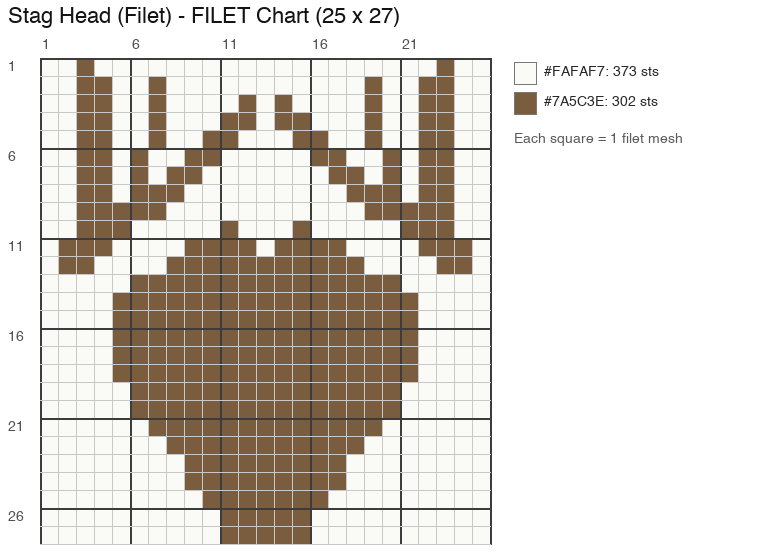
Stag Head (Filet) crochet chart, 25 × 27 blocks, 2 colors

27 rows

Click the chart to jump to a row · Progress saves in your browser — no account needed 💕

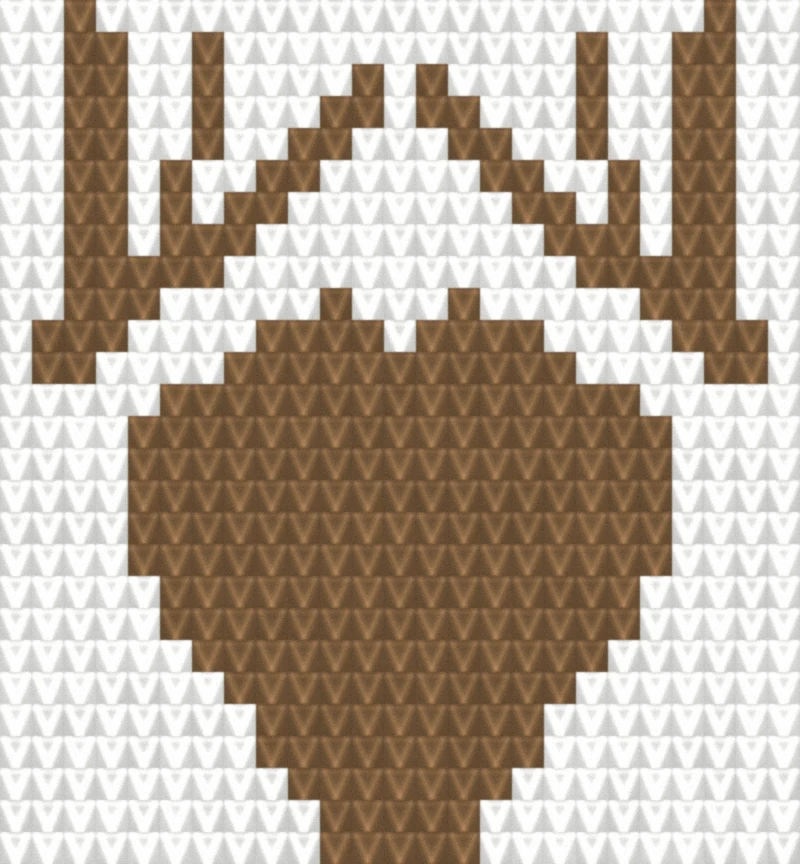
Rendered previewStag Head (Filet) as worked crochet fabric — simulated stitch texture

Simulated stitch texture from the chart grid — not a photo.

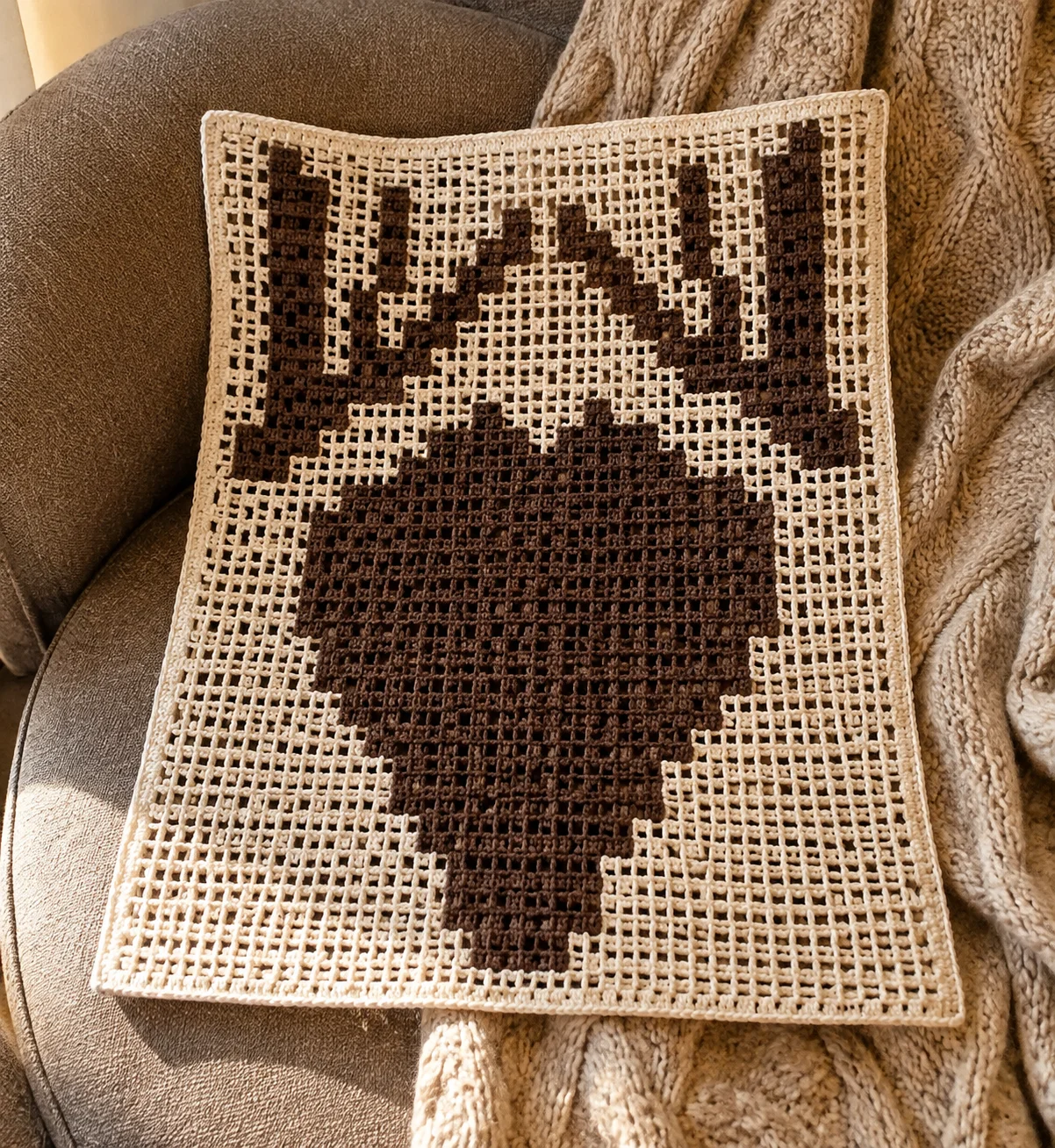
Finished lookStag Head (Filet) — finished crochet piece inspiration

Stag Head (Filet)

Difficulty
Intermediate
Technique
Filet mesh (filled/open blocks)
Chart size
25 × 27 blocks
Colors
2
Yarn needed
size 10 thread ≈ 45 yds
Source
Original pixel design

The vintage wall-hanging staple: branching antlers over a long solemn face. 302 filled blocks, and the antler tines are where counting matters — work them slowly with a marker every 5 blocks. Winter runners and cabin pillows.

Download chart (PNG) ⬇️
Written instructions (row by row)

Work from the bottom up. Odd rows are the right side (worked right-to-left), even rows the wrong side (left-to-right). Tap a row to mark it done — the chart shades it too.

creamColor A
How to crochet it

  1. Choose thread or yarn for your project

    Traditional filet uses size 10 cotton thread with a 1.5–2 mm hook — that's what gives these free filet crochet patterns their lace look, and each chart needs only 30–45 yards. For a pillow panel or blanket square instead, worsted (#4) yarn with a 5.0 mm hook works the same chart at roughly double the size.

  2. Learn the two blocks

    Filet has exactly two moves. A filled block is 3 double crochet; an open block is chain 2 plus a double crochet over the space below. Neighboring blocks share an edge stitch, so each block after the first adds 2 stitches — that's the entire technique, and it's why filet charts are always two colors.

  3. Read the chart as filled vs. open

    Every square is one mesh block: the colored silhouette squares are filled blocks, the background squares are open. Work from the bottom row up, reading odd rows right to left and even rows left to right. The heart is 246 filled blocks out of 399; the butterfly just 189 out of 420.

  4. Set your starting chain

    Chain 3 per block plus 5 (3 for the first block, 2 for the turning chain): the heart, butterfly, and cat at 21 blocks wide start at ch 68, the stag's 25 blocks at ch 80, and the rose's 27 blocks at ch 86. Work a dc in the 8th chain from the hook and the mesh builds itself.

  5. Block it — filet demands it

    Filet looks like a fishing net until you block it. Pin the damp piece to exact dimensions, opening every mesh square, and let it dry fully. Thread pieces like the rose and heart take fabric starch beautifully and will hold their shape on a table or in a window for years.

  6. Make your own filet chart

    Any bold silhouette becomes filet: upload a drawing to the free filet crochet pattern generator and it reduces the image to filled/open blocks with exact counts. Pet profiles, monograms, and simple line art convert as cleanly as these five.

Make your own filet chart

Any bold silhouette becomes filet — a pet profile, a monogram, a logo. The free filet generator reduces it to filled and open blocks, with exact counts.

Frequently asked questions

Are these filet crochet patterns free?

Yes — all five charts download free as PNGs with the grid and block counts, no account and no email wall. They're original pixel designs drawn for this site, free for personal use.

Which filet crochet pattern is best for beginners?

The heart. It's small (21 × 19 blocks), almost two-thirds filled, and the filled blocks run in long rows with no fiddly single-block detail — you learn the two filet blocks without constant counting. The butterfly is the natural second project: symmetrical wings that tell you immediately if you miscounted.

What is filet crochet, in plain terms?

A lace technique built from a grid of just two block types: filled blocks (3 double crochet) form the picture, open blocks (chain 2 + dc) form the background. Bold silhouettes — roses, hearts, stags — are its classic subjects because the shape has to carry the whole design.

How do I read a filet crochet chart?

Each square on the chart is one mesh block. Colored squares are filled blocks (3 dc), empty squares are open blocks (ch 2 + dc). Start at the bottom-right corner, work odd rows right to left and even rows left to right, and the picture appears as you go.

What yarn or thread should I use for filet crochet?

Size 10 cotton crochet thread with a 1.5–2 mm steel hook is the traditional choice — crisp mesh, lace drape, and it starch-blocks beautifully. Any smooth cotton works; avoid fuzzy yarns that blur the open blocks. For a chunky modern look, worsted (#4) yarn at 5.0 mm doubles the finished size.

Can I make a filet chart from my own image?

Yes — the free filet crochet pattern generator converts any high-contrast image into filled/open blocks with exact counts. Silhouettes, monograms, and bold line art give the sharpest results; detailed photos come out abstract, so crop tight and simplify first.