CrochetPatternGen

Crochet Flower Patterns (Free Charts)

Four original flower charts — sunflower, rose, tulip, and sakura — counted for blanket squares, pillows, and spring projects.

A flower chart is the most useful thing in a crocheter's back pocket: one sunflower becomes a blanket square, a rose becomes a pillow front, a row of tulips becomes the spring wall hanging you meant to start in March. These four are original pixel designs — sunflower, rose, tulip, and sakura — sized 15–21 stitches wide, so each one is an evening or two of work, and every color comes with an exact stitch count.

All four charts work the same way: single crochet for a dense little panel, or C2C if you want the same flower 40–60% larger. And if the flower you actually want isn't here — the rose from your garden, the daisy your kid drew — the free pattern generator turns any clear flower photo into a counted chart built to the same spec.

The free charts

Digital preview
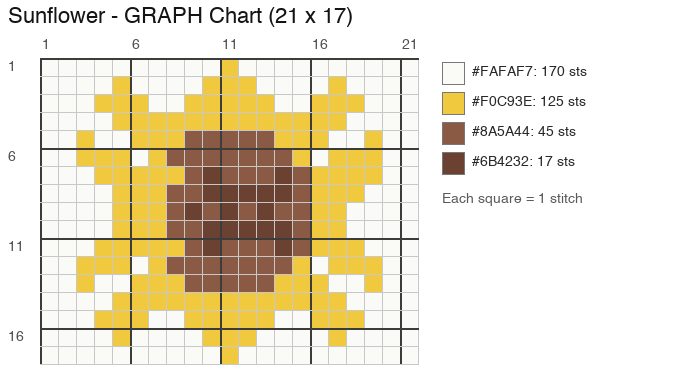
Sunflower crochet chart, 21 × 17 stitches, 4 colors

17 rows

Click the chart to jump to a row · Progress saves in your browser — no account needed 💕

Rendered previewSunflower as worked crochet fabric — simulated stitch texture
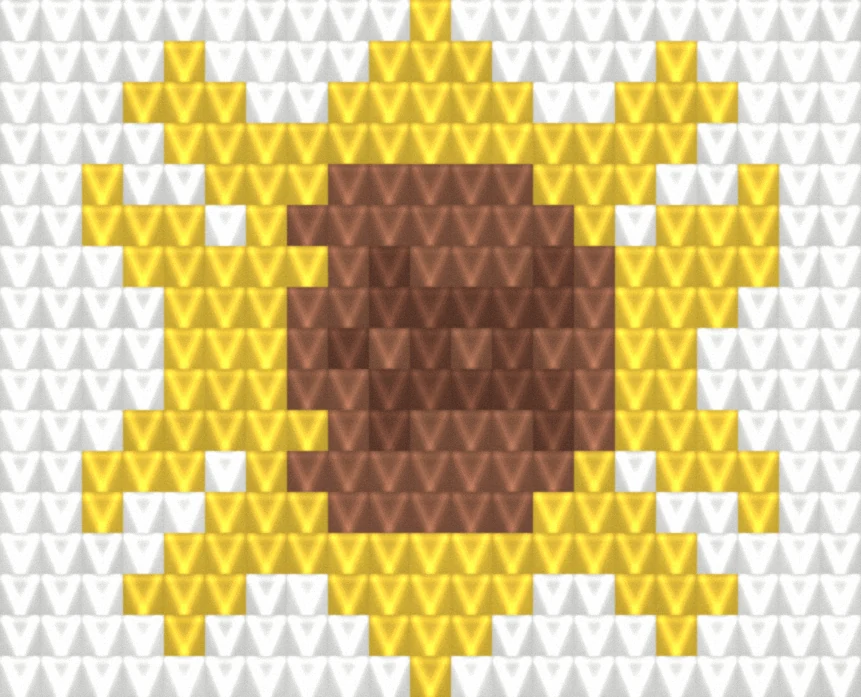
Simulated stitch texture from the chart grid — not a photo.

Finished lookSunflower — finished crochet piece inspiration
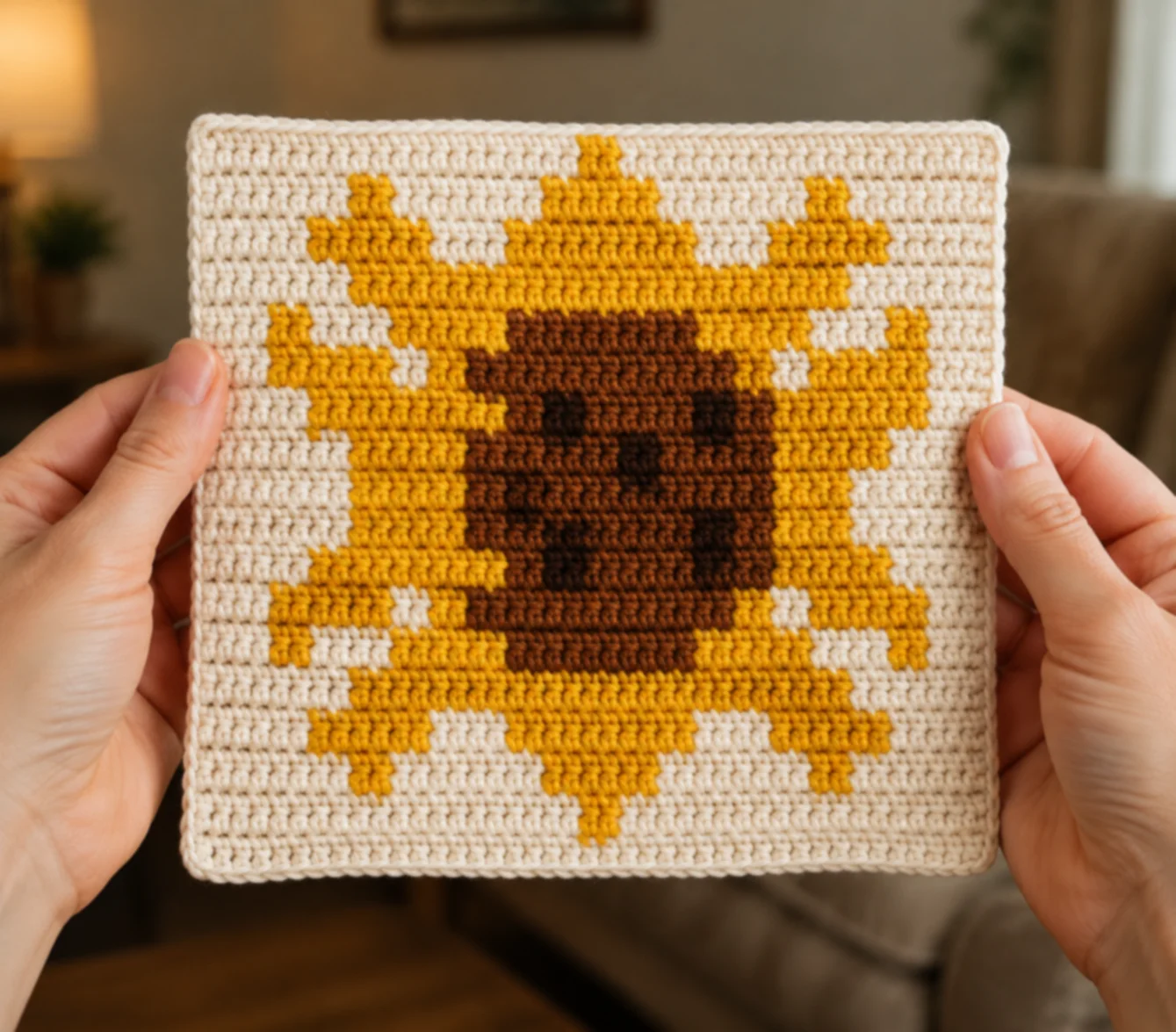
Sunflower

Difficulty
Easy
Technique
Graph (single crochet) or C2C
Chart size
21 × 17 stitches
Colors
4
Yarn needed
≈ 22 yds total
Source
Original pixel design

Golden pointed petals around a chocolate-brown center, with 17 darker stitches sprinkled in as seeds. The flower itself is 187 of the 357 stitches — the cream background works up fast.

Download chart (PNG) ⬇️
Written instructions (row by row)

Work from the bottom up. Odd rows are the right side (worked right-to-left), even rows the wrong side (left-to-right). Tap a row to mark it done — the chart shades it too.

creamyellowColor AColor B
Digital preview
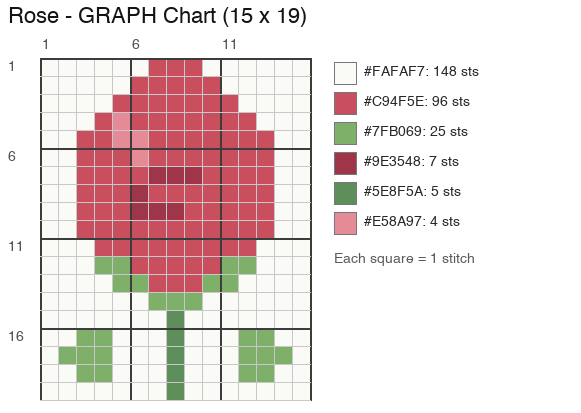
Rose crochet chart, 15 × 19 stitches, 6 colors

19 rows

Click the chart to jump to a row · Progress saves in your browser — no account needed 💕

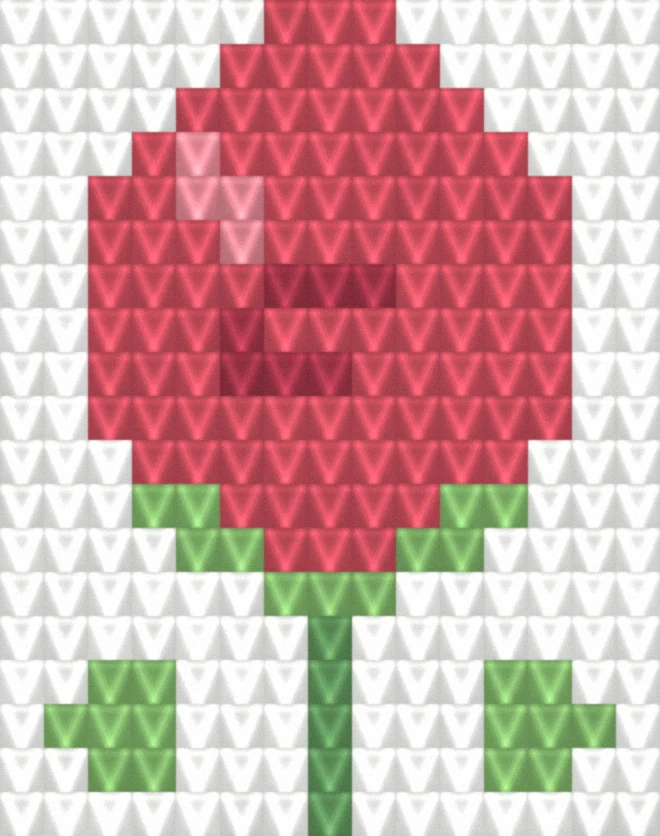
Rendered previewRose as worked crochet fabric — simulated stitch texture

Simulated stitch texture from the chart grid — not a photo.

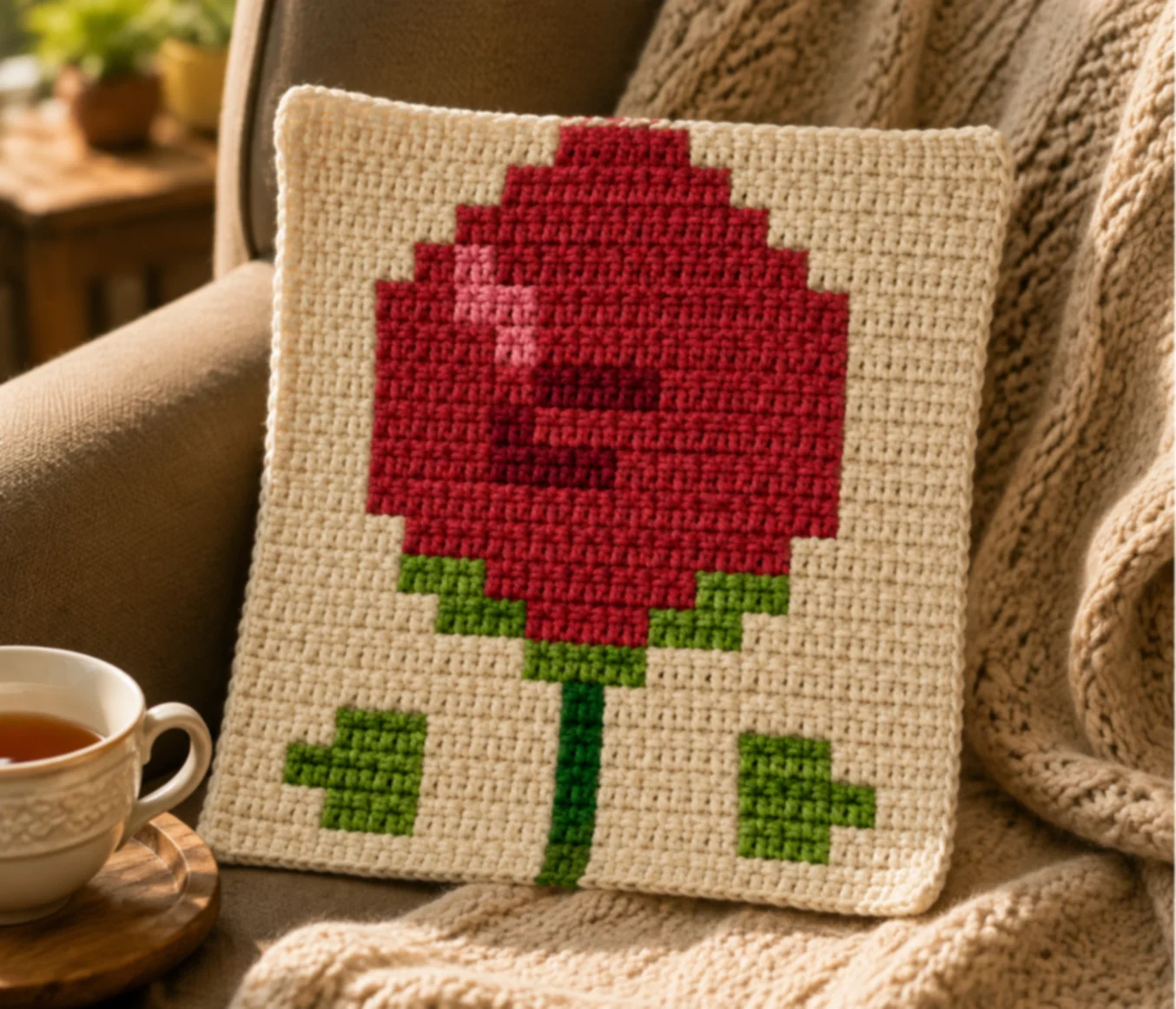
Finished lookRose — finished crochet piece inspiration

Rose

Difficulty
Easy
Technique
Graph (single crochet) or C2C
Chart size
15 × 19 stitches
Colors
6
Yarn needed
≈ 18 yds total
Source
Original pixel design

A deep-red swirl of petals with two pale-pink highlight stitches, on a green calyx of sepals with a slim stem and two leaves. The shading colors total just 16 stitches, so the fancy look stays friendly.

Download chart (PNG) ⬇️
Written instructions (row by row)

Work from the bottom up. Odd rows are the right side (worked right-to-left), even rows the wrong side (left-to-right). Tap a row to mark it done — the chart shades it too.

creamColor CColor EColor DColor BColor A
Digital preview
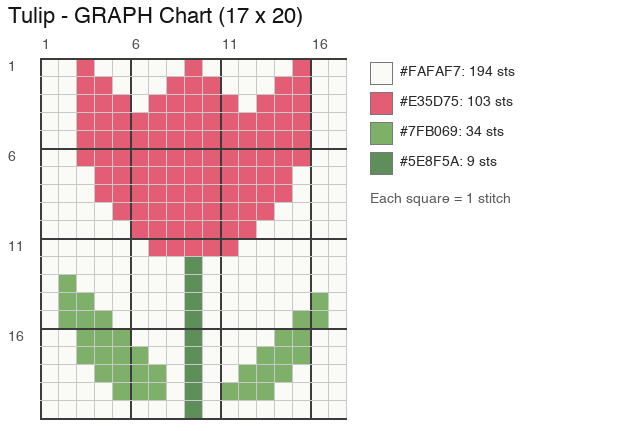
Tulip crochet chart, 17 × 20 stitches, 4 colors

20 rows

Click the chart to jump to a row · Progress saves in your browser — no account needed 💕

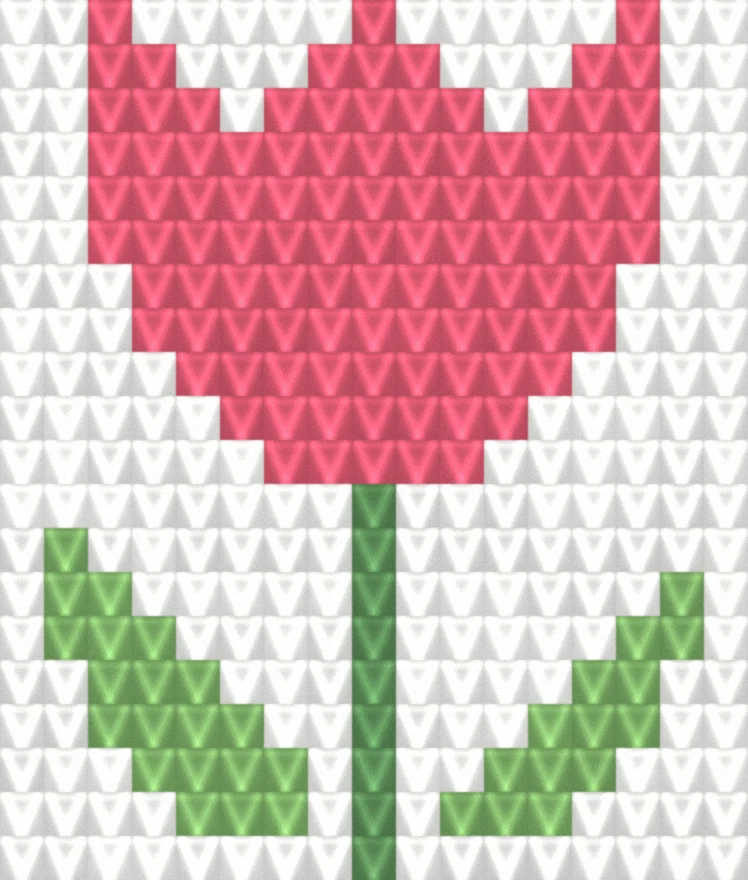
Rendered previewTulip as worked crochet fabric — simulated stitch texture

Simulated stitch texture from the chart grid — not a photo.

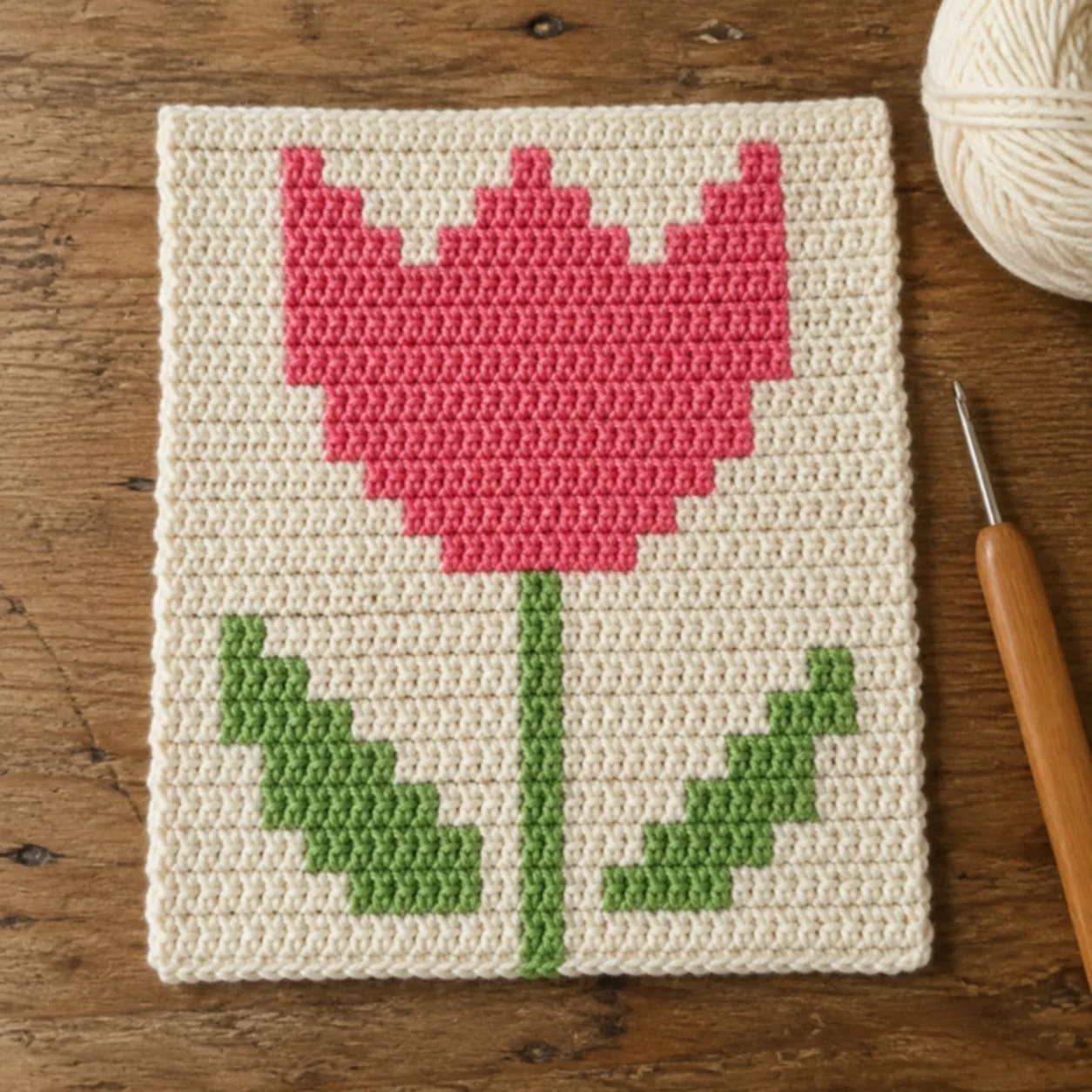
Finished lookTulip — finished crochet piece inspiration

Tulip

Difficulty
Beginner
Technique
Graph (single crochet) or C2C
Chart size
17 × 20 stitches
Colors
4
Yarn needed
≈ 20 yds total
Source
Original pixel design

The M-shaped petal top is the tulip tell: three little points over a cup-shaped corolla, on a straight stem with two outcurved leaves. Only 146 motif stitches — the fastest finish of the four.

Download chart (PNG) ⬇️
Written instructions (row by row)

Work from the bottom up. Odd rows are the right side (worked right-to-left), even rows the wrong side (left-to-right). Tap a row to mark it done — the chart shades it too.

creamrose redColor AColor B
Digital preview
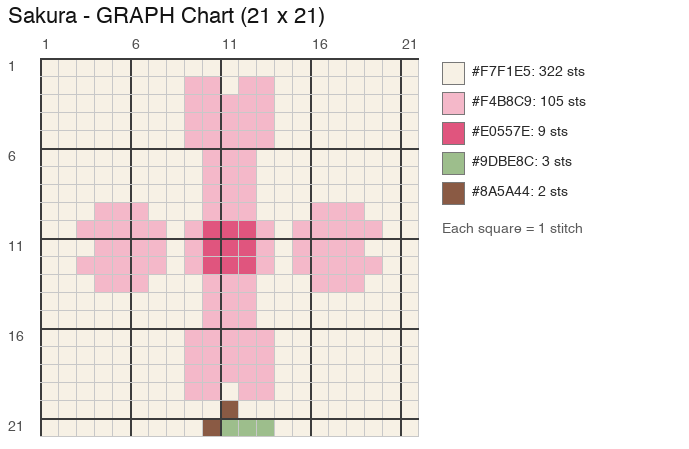
Sakura crochet chart, 21 × 21 stitches, 6 colors

21 rows

Click the chart to jump to a row · Progress saves in your browser — no account needed 💕

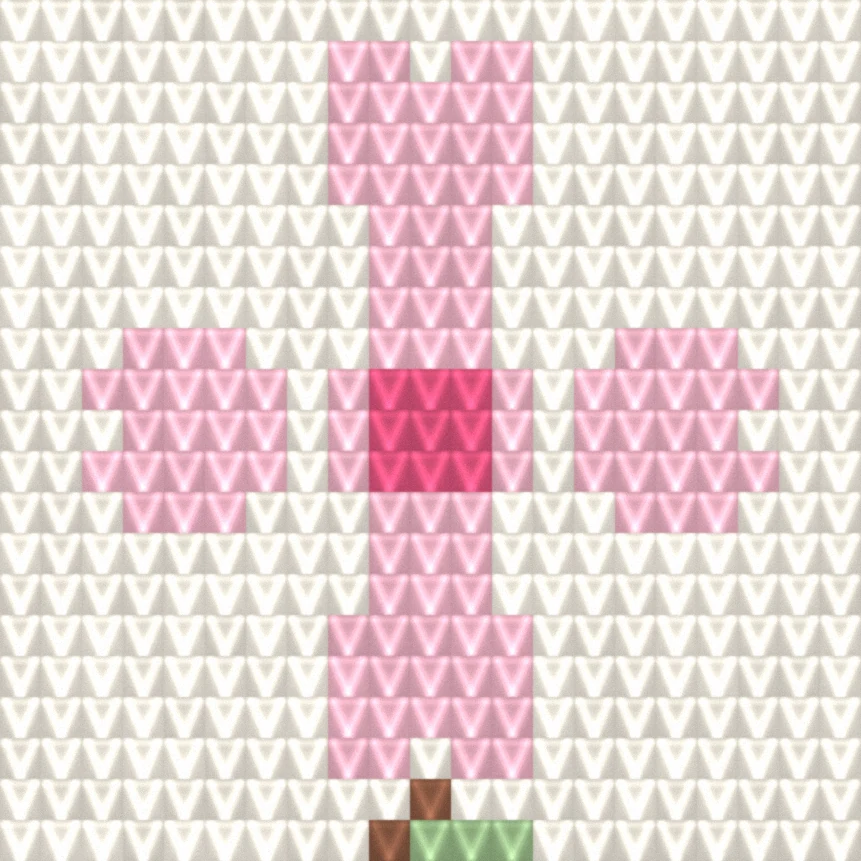
Rendered previewSakura as worked crochet fabric — simulated stitch texture

Simulated stitch texture from the chart grid — not a photo.

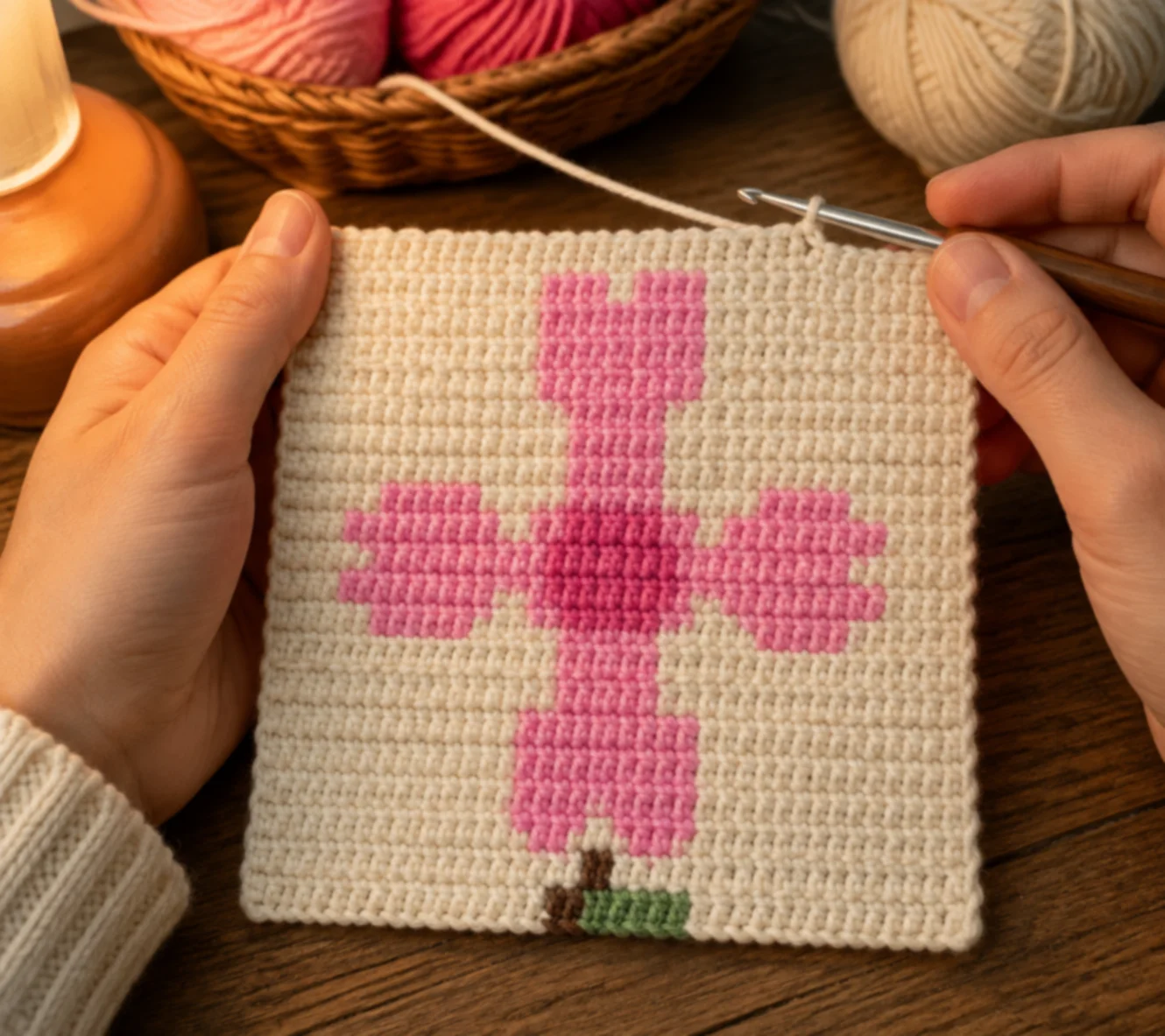
Finished lookSakura — finished crochet piece inspiration

Sakura

Difficulty
Easy
Technique
Graph (single crochet) or C2C
Chart size
21 × 21 stitches
Colors
6
Yarn needed
≈ 27 yds total
Source
Original pixel design

Five soft-pink petals around a deep-pink heart, with a tiny brown branch at the base. Originally drawn for a Japanese-style pouch, so it pairs naturally with bags and wall hangings.

Download chart (PNG) ⬇️
Written instructions (row by row)

Work from the bottom up. Odd rows are the right side (worked right-to-left), even rows the wrong side (left-to-right). Tap a row to mark it done — the chart shades it too.

Color AColor DColor EColor CColor B

How to crochet it

  1. Gather your materials

    Worsted weight (#4) yarn, a 5.0 mm (H/8) hook, a tapestry needle, and scissors. Each free crochet flower pattern here uses 18–27 yards total across 4–6 colors — genuine stash-busters, and the per-color stitch counts in every legend are your shopping list (the sunflower's yellow is the biggest pull at 125 stitches).

  2. Check the finished size

    In single crochet at a typical 16 sc × 18 rows = 10 cm gauge, the charts come out 9–13 cm per side: the tulip (17 × 20) is about 11 cm square, the sakura (21 × 21) about 13 × 12 cm. Worked as C2C, each cell becomes one block and the flowers come out 40–60% larger — pillow-front size.

  3. Work the chart from the bottom up

    One square = one single crochet, starting at the bottom row: odd rows are the right side (read right to left), even rows the wrong side (read left to right). The largest chart (sakura) is 441 stitches — one evening for most crocheters. For C2C, start at the bottom-right corner and work diagonally.

  4. Change colors cleanly

    Finish the last stitch of the old color with the new one, and drop the yarn instead of carrying it more than 3–4 stitches. The fiddly bits are tiny — the sunflower's seed dots, the rose's highlights — so work them off small bobbins and the back stays tidy.

  5. Turn them into something floral

    Work one round of single crochet in the background color around each panel (3 sc in each corner), weave in the ends, and steam block lightly. Then sew the flowers onto blanket squares, pillow fronts, totes, or pouches — or string all four into a spring garland.

Make your own chart

Have a photo you love? The free generator turns it into a stitch-ready chart — grid, palette, and stitch counts included.

Frequently asked questions

Are these crochet flower patterns free?

Yes — all four charts download free as PNGs with grid, palette, and per-color stitch counts, no email wall. They're original pixel designs drawn for this site, free for personal use.

Which flower chart is best for beginners?

The tulip: 17 × 20 stitches, four colors, and big connected blocks of pink and green with no single-stitch detail. Most beginners finish it in one sitting — the sunflower's seed speckles are the natural step up after that.

What can I make with a crochet flower chart?

Blanket squares are the classic, but these sizes also suit pillow fronts, tote-bag panels, wall hangings, and garlands. The sakura was originally designed for a pouch, and any of the four converts to C2C for a larger throw panel.

Can I use these flower charts for C2C?

Yes — each cell becomes one C2C block worked diagonally from the bottom-right corner. In C2C with worsted yarn the flowers come out roughly 40–60% larger, a nice size for pillow fronts or the panels of a spring throw.

Can I turn a photo of a real flower into a chart?

Yes — upload a clear photo to the free pattern generator and it converts it into a counted stitch grid. Single blooms on plain backgrounds convert best; at these small grid sizes, keep the palette to 4–6 colors.

What yarn should I use for flower charts?

Worsted-weight (#4) acrylic or cotton with a 5.0 mm (H/8) hook. Each flower needs only 18–27 yards total, so raid the stash first — the legend's stitch counts tell you exactly how much of every color to pull.