CrochetPatternGen

Crochet Dishcloth Patterns

Four cotton squares — lemon, strawberry, gingham, and flower — charted stitch by stitch, pretty enough to gift, tough enough to use.

A crochet dishcloth is the best first colorwork project in the craft: small enough to finish in two evenings, useful even if the tension is wonky, and 100% cotton forgives every mistake in the wash. These four charts are flat 20–24 stitch squares — a lemon, a strawberry, a two-tone gingham, and a daisy — each one a stitch-by-stitch grid with every color counted.

Every chart doubles as a crochet washcloth pattern with zero changes — same cloth, softer marketing. Work them in dishcloth cotton (Lily Sugar'n Cream, Drops Paris, or any #4 cotton), gift them in sets of three tied with twine, and keep the gingham for yourself.

The free charts

Digital preview
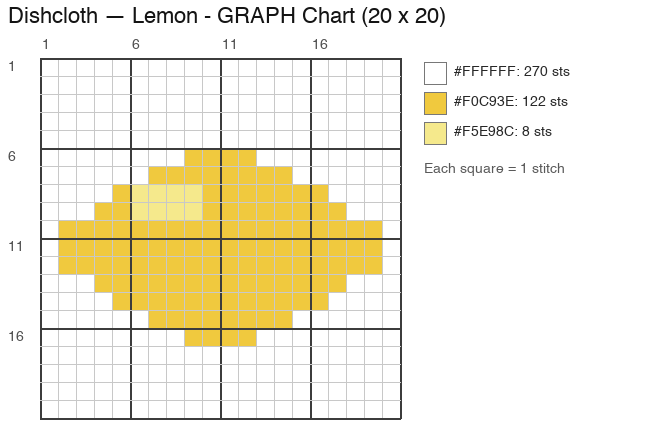
Lemon Dishcloth crochet chart, 20 × 20 stitches, 3 colors

20 rows

Click the chart to jump to a row · Progress saves in your browser — no account needed 💕

Rendered previewLemon Dishcloth as worked crochet fabric — simulated stitch texture
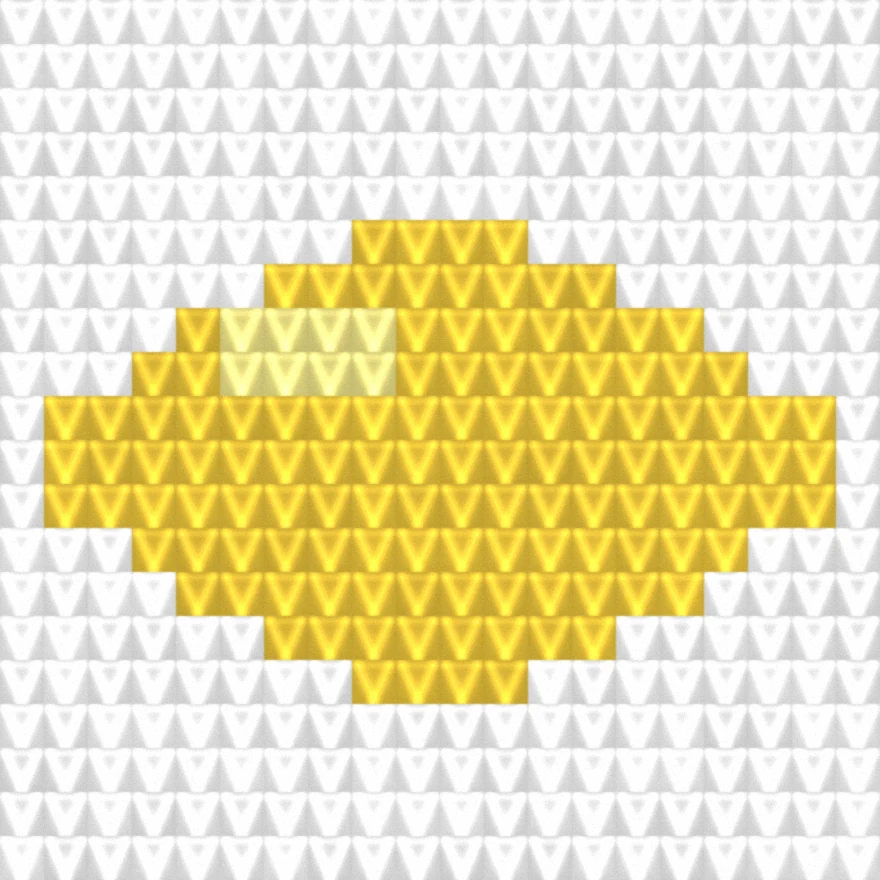
Simulated stitch texture from the chart grid — not a photo.

Lemon Dishcloth

Difficulty
Easy
Technique
Graph (single crochet)
Chart size
20 × 20 stitches
Colors
3
Yarn needed
≈ 30 yds cotton
Source
Original pixel design

122 yellow stitches with a pale-yellow highlight on white — bright enough to find in a sink full of suds, and the pointed lemon ends make it read as fruit, not a blob.

Download chart (PNG) ⬇️
Written instructions (row by row)

Work from the bottom up. Odd rows are the right side (worked right-to-left), even rows the wrong side (left-to-right). Tap a row to mark it done — the chart shades it too.

whiteyellowpale yellow
Digital preview
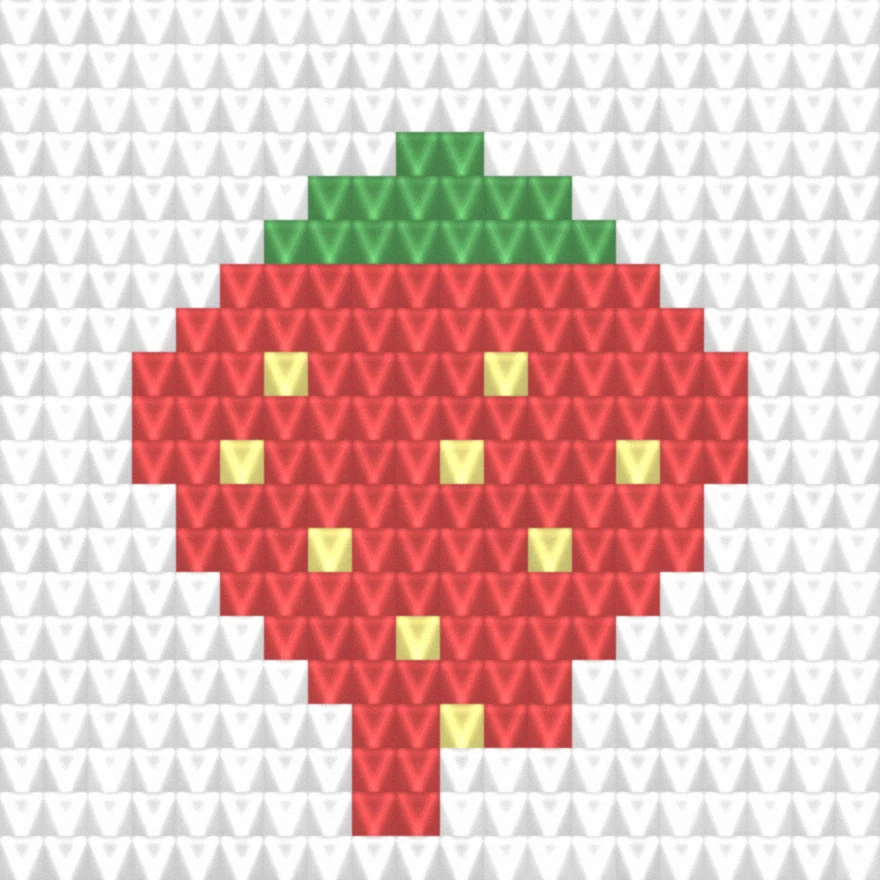
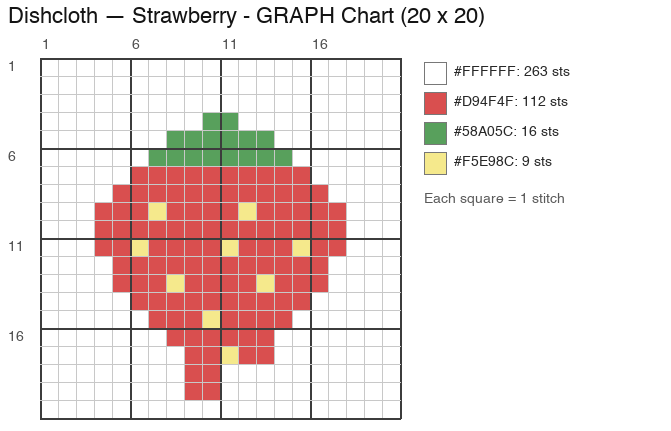
Strawberry Dishcloth crochet chart, 20 × 20 stitches, 4 colors

20 rows

Click the chart to jump to a row · Progress saves in your browser — no account needed 💕

Rendered previewStrawberry Dishcloth as worked crochet fabric — simulated stitch texture

Simulated stitch texture from the chart grid — not a photo.

Strawberry Dishcloth

Difficulty
Easy
Technique
Graph (single crochet)
Chart size
20 × 20 stitches
Colors
4
Yarn needed
≈ 30 yds cotton
Source
Original pixel design

112 red stitches, 16 green, 9 pale-yellow seeds. The gift cloth that mysteriously never gets used for dishes — make two.

Download chart (PNG) ⬇️
Written instructions (row by row)

Work from the bottom up. Odd rows are the right side (worked right-to-left), even rows the wrong side (left-to-right). Tap a row to mark it done — the chart shades it too.

whiteleaf greenredpale yellow
Digital preview
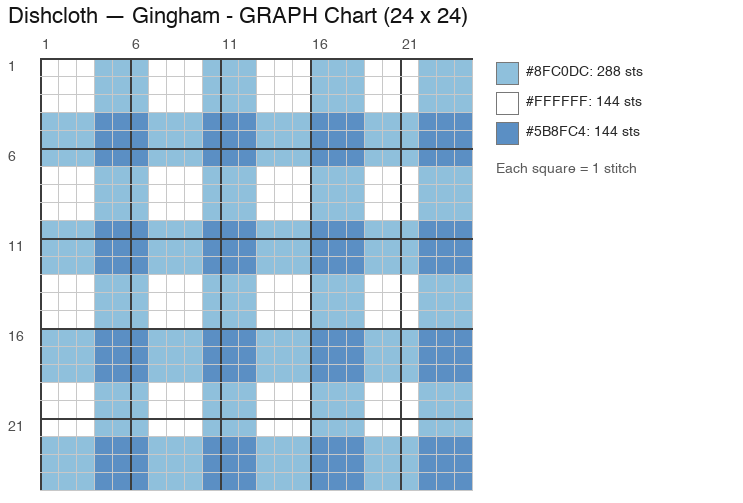
Gingham Dishcloth crochet chart, 24 × 24 stitches, 3 colors

24 rows

Click the chart to jump to a row · Progress saves in your browser — no account needed 💕

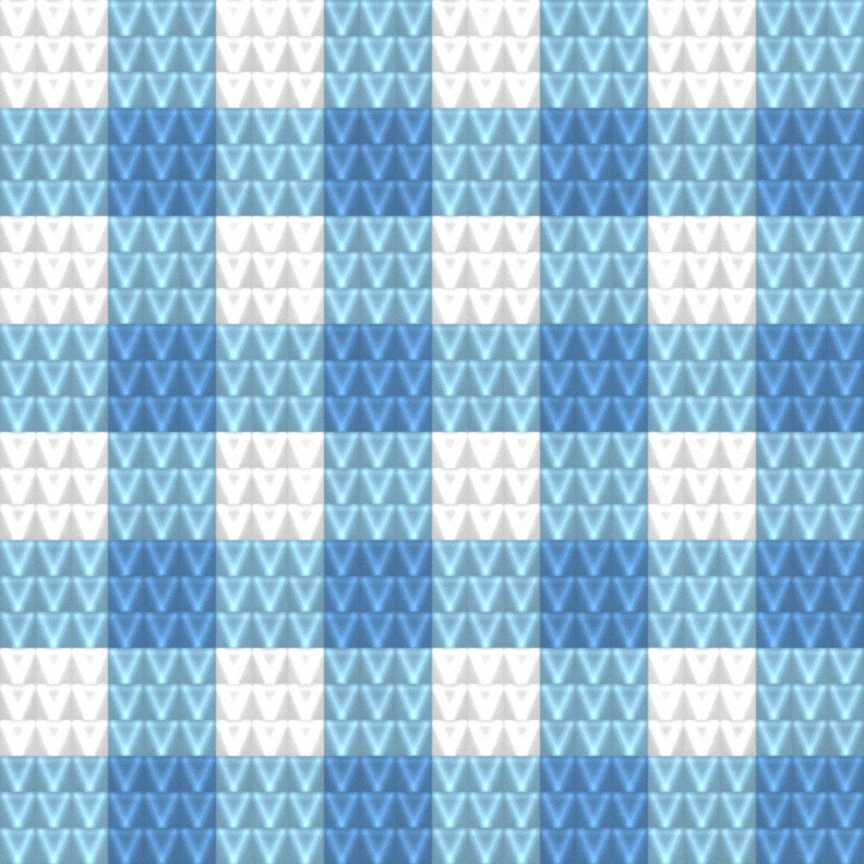
Rendered previewGingham Dishcloth as worked crochet fabric — simulated stitch texture

Simulated stitch texture from the chart grid — not a photo.

Gingham Dishcloth

Difficulty
Beginner
Technique
Tapestry (single crochet)
Chart size
24 × 24 stitches
Colors
3
Yarn needed
≈ 45 yds cotton
Source
Original pixel design

Two-tone checks in blues over white — 576 stitches, 3 colors, and the carried yarn hides inside the stitches so there's exactly one end per color to weave. The classic, and the fastest of the four.

Download chart (PNG) ⬇️
Written instructions (row by row)

Work from the bottom up. Odd rows are the right side (worked right-to-left), even rows the wrong side (left-to-right). Tap a row to mark it done — the chart shades it too.

whitelight blueblue
Digital preview
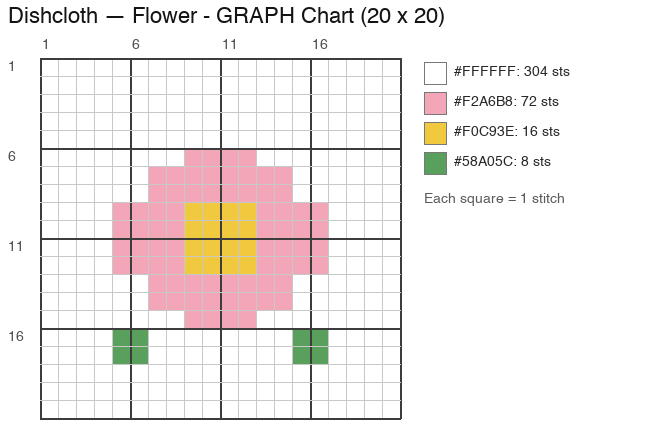
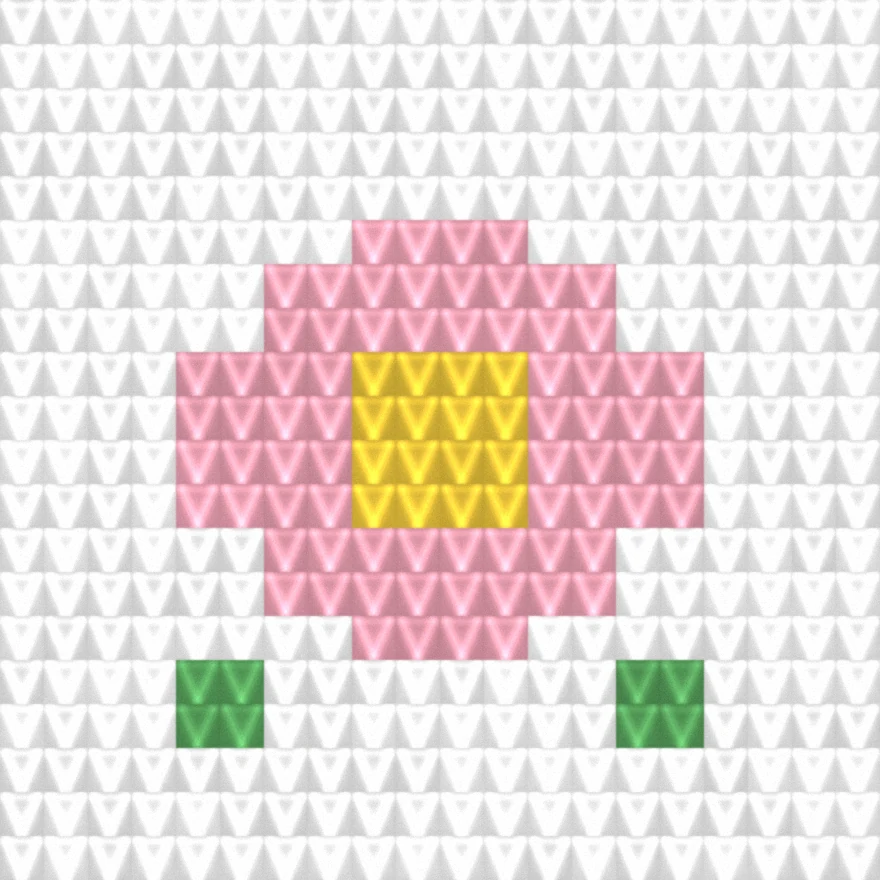
Flower Dishcloth crochet chart, 20 × 20 stitches, 4 colors

20 rows

Click the chart to jump to a row · Progress saves in your browser — no account needed 💕

Rendered previewFlower Dishcloth as worked crochet fabric — simulated stitch texture

Simulated stitch texture from the chart grid — not a photo.

Flower Dishcloth

Difficulty
Easy
Technique
Graph (single crochet)
Chart size
20 × 20 stitches
Colors
4
Yarn needed
≈ 30 yds cotton
Source
Original pixel design

96 stitches of daisy — pink petals, yellow center, two little leaves. Cheerful, and the petal texture hides scrubbing wear better than a flat color.

Download chart (PNG) ⬇️
Written instructions (row by row)

Work from the bottom up. Odd rows are the right side (worked right-to-left), even rows the wrong side (left-to-right). Tap a row to mark it done — the chart shades it too.

whitepinkyellowleaf green

How to crochet it

  1. Gather your materials

    Worsted weight (#4) cotton yarn — not acrylic, which melts on hot pans and doesn't absorb water — a 5.0 mm (H/8) hook, a tapestry needle, and scissors. Each 20 × 20 cloth takes about 30 yards; the gingham takes 45. One 50 g ball of cotton makes two cloths with change.

  2. Check the finished size

    At 16 sc × 18 rows = 10 cm, the 20-stitch charts come out ≈ 12.5 cm square and the gingham ≈ 15 cm. Like a bigger cloth? Add rounds of single crochet border — each round adds about 1.2 cm to the total width — or go up to a 5.5 mm hook for a looser, larger cloth.

  3. Work the chart from the bottom up

    One square = one single crochet, from the bottom row up: odd rows right to left, even rows left to right. Keep the tension firm — a dishcloth should be dense enough to scrub, not drape.

  4. Carry the unused color

    This is tapestry crochet: lay the idle yarn along the top of the row and stitch over it. On the gingham you're carrying on every row; on the fruit cloths, only across the motif. Never carry more than 4–5 stitches or floats will snag in the wash.

  5. Add the border and a hanging loop

    One round of single crochet in the main color around the finished square, 3 sc in each corner, squares everything up. Chain 10 at one corner and slip-stitch it back for a hanging loop — the detail that makes a handmade cloth look shop-bought.

  6. Wash like laundry, because it is

    Cotton dishcloths go in the machine at 60 °C and come back better — the stitches bloom and even out after the first wash. Retire them to cleaning duty after a few months and make another set; at 30 yards each, that's the whole point.

Make your own chart

Have a photo you love? The free generator turns it into a stitch-ready chart — grid, palette, and stitch counts included.

Frequently asked questions

What's the best yarn for a crochet dishcloth?

100% worsted cotton, full stop. It absorbs water, survives 60 °C washes, and scrubs without scratching. Acrylic doesn't absorb and melts on hot cookware; wool felts. Lily Sugar'n Cream and Drops Paris are the standard picks.

Is a dishcloth a good first colorwork project?

The best one. It's small (400–576 stitches), the mistakes wash out, and even a lumpy first cloth still cleans dishes. The gingham chart is the ideal start — two colors alternating every 3 stitches teaches carrying yarn faster than any tutorial.

Can I use these as a crochet washcloth pattern instead?

Yes — same charts, same cotton, softer job. For face cloths, use a softer cotton (a cotton-bamboo blend), skip the hanging loop, and go down to a 4.5 mm hook for a denser, gentler fabric.

How do I make the dishcloth bigger?

Two easy ways: add border rounds of single crochet (each round ≈ +1.2 cm to the width), or hold two strands of cotton together with a 6 mm hook, which roughly doubles both size and thickness. Doubling the chart itself makes a 25 cm cloth that's more towel than dishcloth.

How many dishcloths from one ball of cotton?

A standard 50 g / 85 yd ball of worsted cotton makes two 20 × 20 cloths with leftovers, or one gingham plus most of a second. Buy the 3-ball pack and you have a gift set plus one for the sink.